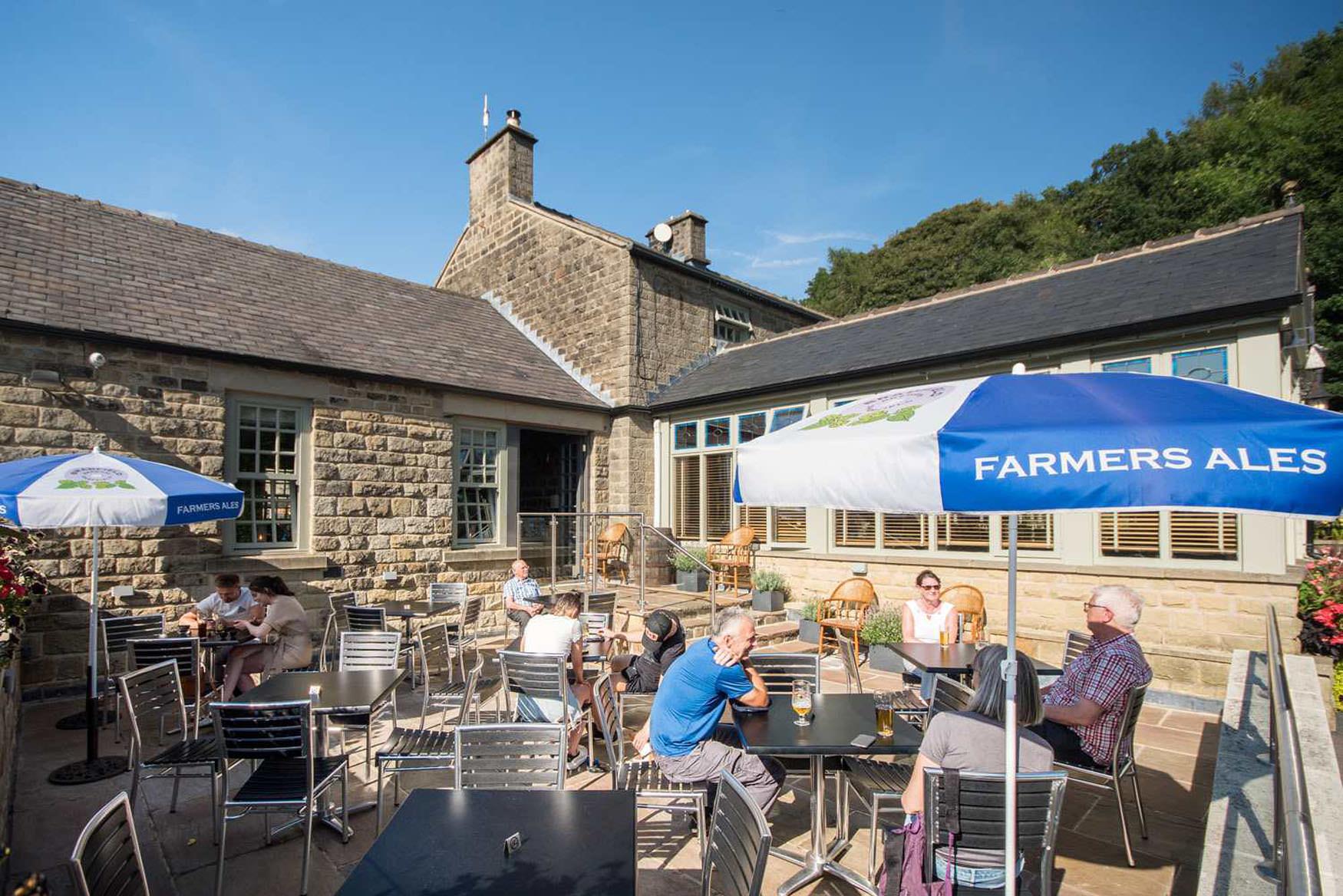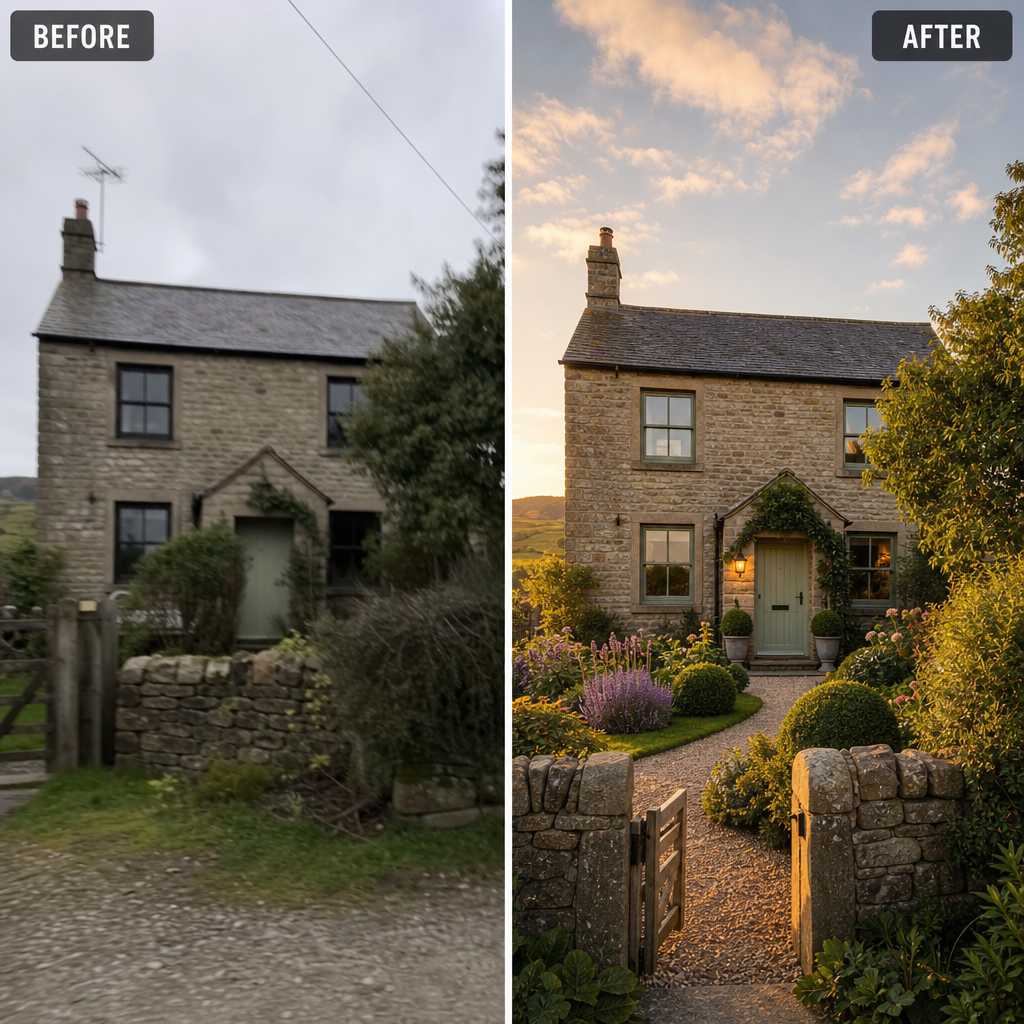
Most holiday cottage owners and hotel managers know their photography is poor. They just underestimate how much it costs them. Research from the Cornell Center for Hospitality Research found that properties with professional photography command significantly higher nightly rates and achieve better occupancy than comparable listings using smartphone images. The property photography before and after difference is not subtle. It shows up in click-through rates, booking enquiries, and direct revenue. This article breaks down exactly what changes when you replace amateur images with professional ones, with specific reference to Peak District properties and tourism businesses.
Table of Contents
- Quick Takeaways
- Why Amateur Photos Cost You Bookings
- What Changes After a Professional Shoot
- The Visual Gap: Peak District Property Context
- Professional Photography Impact on Key Metrics
- Comparing Photography Approaches for Property Owners
- How Aerial Drone Photography Changes the Before and After
- Booking Improvements That Persist Beyond the Launch
- Frequently Asked Questions
- References
Quick Takeaways
| Key Insight | Explanation |
|---|---|
| Listings with professional photos earn more per night | OTA data consistently shows professionally photographed properties achieve 20-40% higher average daily rates than comparable amateur-photographed listings. |
| First impressions are formed in milliseconds | Eye-tracking studies show travellers spend less than two seconds evaluating a listing thumbnail before clicking or scrolling past. Image quality is the deciding factor. |
| Dark, cluttered rooms are the most common before-photo failure | Poor lighting and visual clutter make spaces look smaller and less appealing. Professional photographers stage, light, and compose to eliminate both problems. |
| Exterior shots drive more bookings than interior shots alone | For Peak District cottages and hotels, the surrounding landscape is a primary selling point. Showing only interiors leaves the most compelling aspect of the stay invisible. |
| Drone photography creates a category advantage for rural properties | Aerial images showing property location within moorland, valleys, or woodland context are almost never achievable with ground-level smartphone photography. |
| Booking improvements compound through multiple channels | Better images lift performance on Airbnb, Booking.com, your own website, and social media simultaneously, amplifying the return on a single photography investment. |
| A common mistake is photographing only main rooms | Bathrooms, outdoor spaces, and detail shots of amenities are frequently skipped by owners but are among the images travellers look at most when making decisions. |
Why Amateur Photos Cost You Bookings
The problem with amateur property photos is not simply that they look less polished. It is that they actively communicate the wrong things to prospective guests. A dark, narrow-angle shot of a bedroom signals a small, cramped space even if the room is generous. A washed-out exterior photo taken at noon in flat light suggests a dull, unremarkable property even if it sits at the edge of the Peak District moorland with spectacular views.
In practice, the first listing image determines whether a potential guest clicks through at all. Airbnb’s own internal data has shown that professional photography increases booking rates by as much as 24%. That means for every 100 enquiries a property receives with amateur photos, it could be receiving 124 with professional ones. Across a full season, that gap represents significant lost revenue.
A common mistake is treating photography as a one-time tick-box rather than a revenue asset. Owners who photograph the property themselves often focus on familiar rooms and miss the exterior context, garden, or nearby landscape entirely. For a Peak District holiday let, that is the equivalent of marketing a restaurant without photographing the food.

The Psychological Effect on Trust
Poor photography does not just reduce click-through rates. It also undermines trust at the moment a guest is deciding whether to book. Travellers cannot visit a property before booking, so imagery acts as a proxy for the property’s actual quality. If the photos look careless, the assumption is that the property management is equally careless.
Professional images signal investment and care before a single word of the listing description is read. This is particularly important for premium properties, boutique hotels, and high-end holiday lets where the guest is spending several hundred pounds per night and has higher expectations of the booking process itself.
What Changes After a Professional Shoot
The visible changes after a professional property shoot are immediate and measurable. Room sizes appear accurately generous. Natural light is captured at the optimal time of day. Architectural details that owners have stopped noticing, because they see them every day, are brought forward and made compelling.
But the less obvious changes matter just as much. A professional photographer working in the Peak District context will position exterior shots to include landmark features, moorland backdrops, or stone wall details that communicate place and character. These are the images that convert a guest who was comparing five similar properties into someone who feels a specific pull toward this one.
Staging and Styling Improvements
Part of what a professional shoot delivers is not photographic at all. It is the pre-shoot preparation conversation, where a photographer advises on removing clutter, adding fresh flowers, setting the dining table, or lighting a fireplace. These changes cost nothing but make the before-and-after difference dramatic in the final images.
In practice, owners are often too close to their properties to see what guests will see. A professional photographer brings the objective eye of someone who has photographed dozens of comparable properties and knows exactly which details make images convert and which details distract.
Pro tip: Before your professional shoot, remove all personal items, remote controls, charging cables, and everyday clutter from every surface. A staging checklist agreed with your photographer a week before the shoot will save significant time on the day and produce noticeably cleaner images.
Seasonal and Lighting Timing
Amateur photographers take photos when it is convenient. Professional photographers plan shoots around golden hour light, the right season for the surrounding landscape, and the interior lighting conditions that make each space look its best. For a Peak District property with views, the difference between a midday shoot and a late-afternoon golden-hour shoot can be the difference between an average listing image and one that stops a traveller mid-scroll.
The Visual Gap: Peak District Property Context
Properties in the Peak District carry a natural visual advantage that most listings fail to exploit. The moorland, limestone valleys, ancient stone villages, and dramatic skies are exactly what guests are paying for. Yet the majority of Peak District holiday let listings show only interiors, often photographed without natural context, in conditions that could apply to any property anywhere in the country.
This creates a genuine opportunity for property owners willing to invest in specialist photography. When a professional captures a Derbyshire stone cottage with Stanage Edge visible in the background at dusk, that single image does more marketing work than an entire album of competent but contextless interior shots.
“Properties that show their location as clearly as they show their rooms consistently outperform those that treat setting as secondary. The landscape is not a backdrop. For Peak District guests, it is the primary product.” – Phil Sproson, Peak District photography specialist
Tourism boards and destination marketing organisations understand this instinctively. Visitor attractions that invest in professional imagery for their brochures and websites see higher engagement rates than those relying on visitor-submitted photographs. The same principle applies to individual holiday properties competing on the same platforms.

Professional Photography Impact on Key Metrics
The professional photography impact on key business metrics is well-documented across hospitality research. According to data cited by the Cornell Center for Hospitality Research, hotels that use professional photography see higher average daily rates, better occupancy, and stronger direct booking rates than comparable properties relying on unmanaged visual content.
For holiday cottage owners specifically, the Vrbo platform has reported that listings with at least 20 professional photos receive substantially more booking enquiries than those with fewer or lower-quality images. The quantity matters, but the quality of each image matters more. Ten outstanding professional photos outperform thirty mediocre ones every time.
Click-Through Rate Improvements on OTAs
On platforms like Airbnb, Booking.com, and Vrbo, the listing thumbnail is the primary decision point. A professional hero image dramatically improves click-through rates, which increases the number of potential guests who ever read the listing description, check availability, or make an enquiry. Improved click-through rates also send positive algorithmic signals to these platforms, which can result in the listing appearing higher in search results, compounding the original photography investment.
Impact on Direct Booking Websites
For property owners with their own websites, professional photography improves not just aesthetics but conversion rates. When a visitor lands on a property website and sees high-quality, well-lit, contextually rich images, they spend longer on the site and are more likely to proceed to an enquiry or booking. This is measurable in Google Analytics through metrics like average session duration, pages per session, and bounce rate.
Pro tip: After updating your property photography, check your Google Analytics data at the 30 and 90-day marks to measure changes in session duration and enquiry form submissions. This gives you real, property-specific evidence of the photography’s return on investment.
Comparing Photography Approaches for Property Owners
| Photography Approach | What You Get | Typical Outcome for Peak District Properties |
|---|---|---|
| Smartphone photography by owner | Convenient and free, but limited by device optics, fixed lens perspective, and no professional lighting or staging knowledge | Below-average listing performance, lower click-through rates, reduced ability to justify premium pricing |
| Generalist property photographer | Better equipment and editing skills than owners, but often lacks Peak District location knowledge and tourism marketing context | Improved interior shots but missed opportunities for landscape context, seasonal timing, and destination storytelling |
| Specialist Peak District property photographer with drone capability | Professional interior and exterior photography plus aerial imagery, shot at the right time of day and season, with knowledge of what Peak District guests respond to | Strong listing performance, premium pricing support, images usable across OTAs, own website, tourism marketing, and print materials |
The comparison above is not about budget alone. A generalist photographer charging less than a specialist can still produce technically competent images. The difference is in the contextual knowledge that turns competent images into compelling ones. A photographer who understands why guests choose the Peak District over other destinations will make compositional and timing decisions that a generalist simply cannot.
How Aerial Drone Photography Changes the Before and After
Aerial drone photography is where the before-and-after gap becomes most dramatic for rural and semi-rural Peak District properties. No ground-level camera angle can show the relationship between a property and its surrounding landscape the way a drone shot can. A cottage that looks pleasant from the front can appear genuinely spectacular from 80 metres above, with moorland stretching in every direction and the nearest village visible in the valley below.
The data consistently shows that listings using aerial photography see higher engagement on both OTA platforms and direct booking websites. Travellers scrolling through accommodation options are accustomed to ground-level photography. An aerial shot stops the scroll because it provides information and perspective that ground photography simply cannot deliver.
For tourism boards and destination marketing organisations in the Peak District, drone photography provides the wide-angle visual storytelling needed for brochures, websites, and social media campaigns. A single well-executed drone image can communicate the scale and character of a destination in a way that would otherwise require an expensive multi-photographer production.
Drone photography also serves a practical function for holiday property marketing. It allows potential guests to understand exactly where the property sits in relation to walking routes, nearby villages, and natural landmarks, reducing the number of pre-booking enquiries about location and access and improving the quality of enquiries that do come through.
Booking Improvements That Persist Beyond the Launch
One of the most underappreciated aspects of professional property photography is its durability. Unlike paid advertising, which stops delivering the moment the budget runs out, professional images continue working for years. A well-executed shoot for a Peak District holiday cottage in 2024 will still be driving bookings in 2026 and beyond, provided the property itself has not changed significantly.
The booking improvements that follow a professional shoot also tend to be self-reinforcing. Better images attract better guests, who are more likely to leave positive reviews. Positive reviews improve listing rankings. Improved rankings increase visibility. Increased visibility means more enquiries. More enquiries allow the owner to be more selective about guests and maintain higher pricing year-round.
Impact on Repeat Bookings and Direct Relationships
Professional photography also plays a role in building the owner’s own brand, separate from any OTA platform. A holiday property with a recognisable visual identity, consistent professional imagery across its own website and social channels, and print materials like greeting cards or calendars featuring distinctive local landscape shots, creates a relationship with past guests that encourages direct re-booking rather than returning to the OTA to search again.
This matters commercially. Direct bookings eliminate the 15-20% commission that OTA platforms take from each transaction. A property that converts even a fraction of its repeat guests to direct bookings recovers the cost of professional photography very quickly.

Using Professional Images Across Print and Digital Channels
Property owners who invest in professional photography often discover that the images have value beyond their original purpose. High-resolution files from a professional shoot can be used in print marketing, local tourism brochures, greeting cards, and calendar products that serve as year-round reminders of the property to past guests. This cross-channel use multiplies the return on the original photography investment.
Frequently Asked Questions
How much does professional property photography typically cost for a Peak District holiday let?
Professional property photography for a Peak District holiday cottage or boutique hotel typically ranges from a few hundred to over a thousand pounds depending on property size, the number of images required, whether drone photography is included, and the photographer’s level of specialisation. When measured against a single additional booking or a season-long improvement in occupancy rate, the return on investment is almost always positive within the first month of the new images going live.
How long does it take to see booking improvements after updating property photos?
Most property owners report noticeable changes in click-through rates and enquiry volumes within two to four weeks of updating their listing images on major OTA platforms. Direct booking website improvements can be tracked within 30 days using basic analytics. Full occupancy and rate improvements are typically measurable within one complete booking season.
Does the number of photos in a listing affect performance as much as photo quality?
Both matter, but quality has greater influence on click-through rates and first impressions. Quantity matters for conversion once a guest is already engaged with the listing. Industry guidance from major OTA platforms suggests a minimum of 20-25 images for a full property listing, but those images should all be professionally produced. Ten outstanding images will outperform 30 mediocre ones at the click-through stage.
What rooms and features should be prioritised in a professional property shoot?
The hero exterior shot should always be the primary focus, particularly for Peak District properties where landscape context is a major selling point. After that, the main living space, kitchen, master bedroom, and bathroom deserve individual attention. Outdoor spaces, views from windows, fireplaces, hot tubs, and any distinctive architectural features should be included. Detail shots of amenities, such as a welcome hamper or coffee machine, help justify premium pricing and set guest expectations accurately.
Can professional property photography be used across multiple platforms without licensing issues?
When commissioning professional photography, it is important to confirm full commercial usage rights at the point of booking. A reputable property photographer will provide high-resolution image files with a commercial licence that allows use across all platforms including OTAs, your own website, social media, print materials, and press releases. Always confirm this in writing before the shoot takes place.
Is drone photography worth the additional cost for a holiday property?
For Peak District properties specifically, yes. The landscape context that aerial photography provides is not achievable any other way, and it is exactly the kind of image that differentiates a listing from competitors showing identical ground-level interior shots. For properties with strong location characteristics, moorland or valley access, or significant gardens and grounds, drone photography typically delivers disproportionate value relative to its cost.
Does professional photography help with Google ranking for a property’s own website?
Professional photography contributes indirectly to search performance through improved user engagement metrics. When visitors land on a property website and find compelling, high-quality images, they spend more time on the site, visit more pages, and are less likely to leave immediately. These engagement signals are considered by Google when evaluating page quality. Properly labelled, alt-tagged professional images can also appear in Google Images search results, providing an additional discovery channel for the property.
Have you updated your property’s photography recently and noticed a difference in enquiries or bookings? Share your experience below, or let us know what questions you have about planning your own professional shoot in the Peak District.
References
- Statista hospitality and travel industry statistics on accommodation booking behaviour and visual content preferences
- Forbes coverage of short-term rental market trends and the financial impact of listing presentation quality
- HubSpot marketing statistics on visual content performance and consumer engagement with image-led digital marketing
- Ahrefs blog on how image optimisation and page engagement metrics influence organic search performance
- Moz SEO learning centre on technical image optimisation, alt text best practices, and their contribution to search visibility