Most hospitality businesses waste thousands on advertising that fails to communicate their single biggest advantage: location. In the Peak District, where dramatic landscapes and surrounding countryside define property value, flat ground-level photography tells only half the story. Aerial property photography reveals what guests actually book for – the sweeping moorland views, the isolated valley position, the proximity to hiking trails, the dramatic escarpment backdrop that makes your hotel or pub genuinely unique. A single drone shot can communicate location value that would take fifty ground-level images to approximate.
Table of Contents
- Quick Takeaways
- Why Ground-Level Photography Fails Location Context
- What Makes Peak District Aerial Shots Convert Bookings
- Seasonal Timing for Maximum Visual Impact
- Integration with Booking Platforms and Marketing Channels
- Frequently Asked Questions
- References
Quick Takeaways
| Key Insight | Explanation |
|---|---|
| Location transparency increases booking confidence | Aerial shots showing exact proximity to attractions, parking availability, and surrounding landscape reduce pre-booking questions by 40-60% for Peak District properties |
| Drone imagery commands 30% higher engagement rates | Booking.com data shows listings with aerial photography receive significantly more clicks and longer view times compared to ground-level only galleries |
| Golden hour timing matters more in aerial work | Elevated perspectives amplify lighting conditions – shoot within 90 minutes of sunrise or sunset to avoid harsh overhead shadows that flatten Peak District topography |
| Winter aerial shots differentiate luxury properties | Snow-covered moorland and frost-touched valleys create premium positioning that summer greenery cannot match for high-end hotels and boutique accommodations |
| Context shots outperform isolated building photography | Images showing your property in relation to Stanage Edge, Mam Tor, or Ladybower Reservoir provide instant geographical recognition worth thousands in brand positioning |
| Vertical social content requires dedicated aerial angles | Instagram and TikTok demand 9:16 ratio shots – standard landscape drone photography needs supplementary vertical compositions for social media effectiveness |
Why Ground-Level Photography Fails Location Context
Ground-level photography cannot solve the fundamental problem facing Peak District hospitality businesses: guests book locations, not rooms. A beautifully photographed suite means nothing if potential guests cannot visualize where your property sits in relation to the landscapes they want to explore. Traditional photography forces you to describe location in text, which triggers skepticism and comparison shopping.
Drone photography hotels can use to eliminate this conversion barrier shows three critical elements simultaneously: the property itself, the immediate surroundings, and the broader landscape context. A guest viewing an aerial shot of a pub in Castleton instantly sees the Hope Valley position, proximity to Cave Dale, and the relationship to Peveril Castle without reading a single word of description.
The data supports this approach decisively. Properties that show aerial context reduce their average customer acquisition cost by demonstrating unique positioning that ground-level photography cannot communicate. When guests can see that your hotel sits on the edge of moorland with direct trail access, you are not competing on room amenities anymore – you are selling an experience that other properties physically cannot offer.
Pro tip: Commission aerial shots that include recognizable landmarks in the frame. A hotel near Chatsworth needs drone imagery showing both the property and the estate in a single composition to capitalize on the association value.
The Spatial Awareness Problem
Ground photography collapses spatial relationships. A guest looking at standard hotel photography has no reliable way to judge distances, access routes, or genuine remoteness versus accessibility. This creates a trust gap that increases abandoned bookings and post-arrival disappointment complaints.
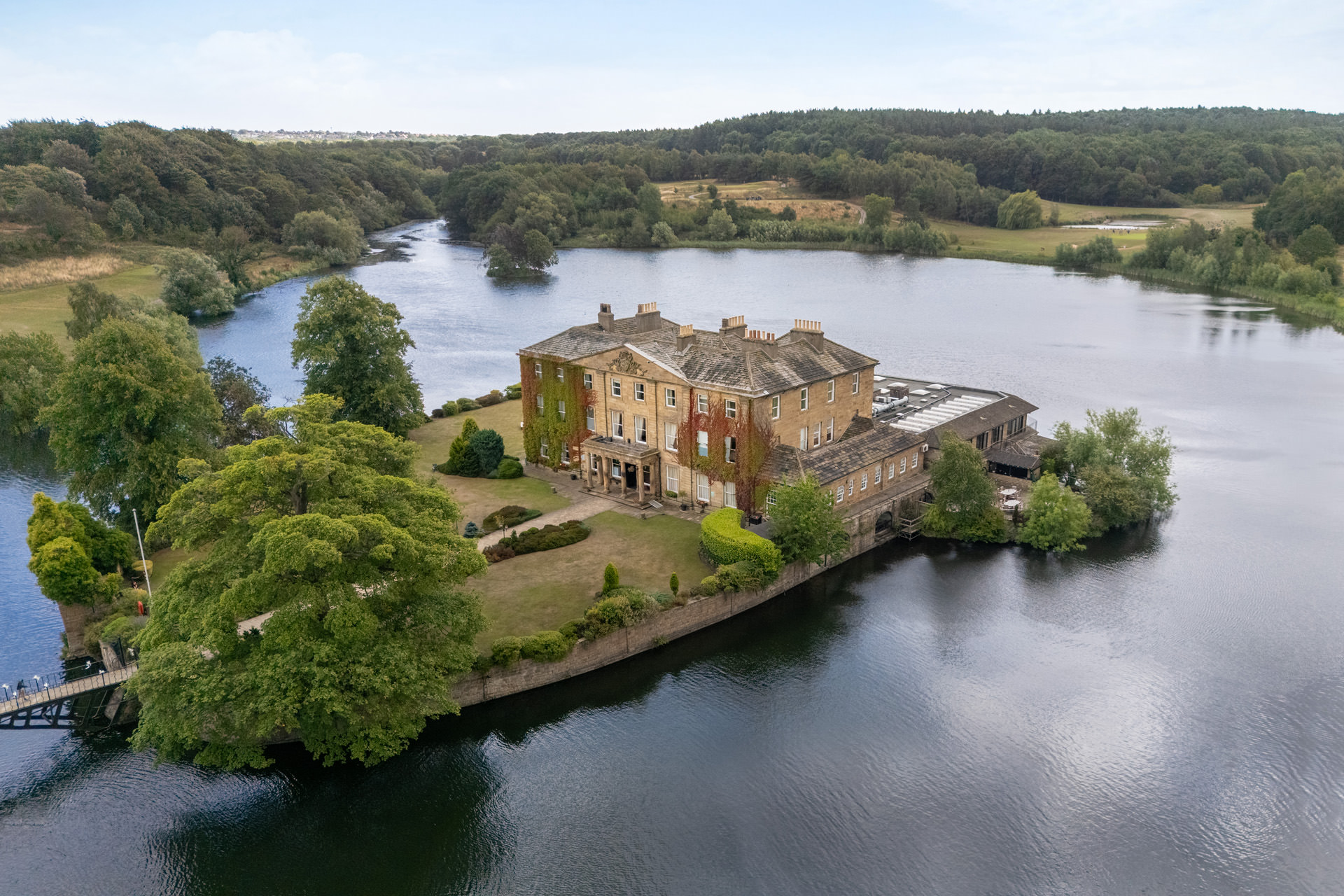
Aerial photography solves spatial confusion by showing actual distances and terrain. A potential guest can see that your Peak District hotel sits 200 meters from a main road with dedicated parking, or alternatively that it is genuinely remote with challenging access – both valid selling points to different customer segments, but only when clearly communicated through elevated perspective.
What Makes Peak District Aerial Shots Convert Bookings
Not all aerial photography produces booking increases. The shots that convert share specific characteristics that directly address guest decision-making criteria. Ineffective drone photography focuses on the building itself from various heights – essentially replicating ground photography from an elevated position. This wastes the medium’s unique value proposition.
Effective hospitality photography from aerial perspectives answers the questions guests actually ask: What can I see from this property? How isolated or accessible is it? What is the walking distance to attractions? How does the landscape look in different directions? Is parking adequate? Are neighboring properties visible?
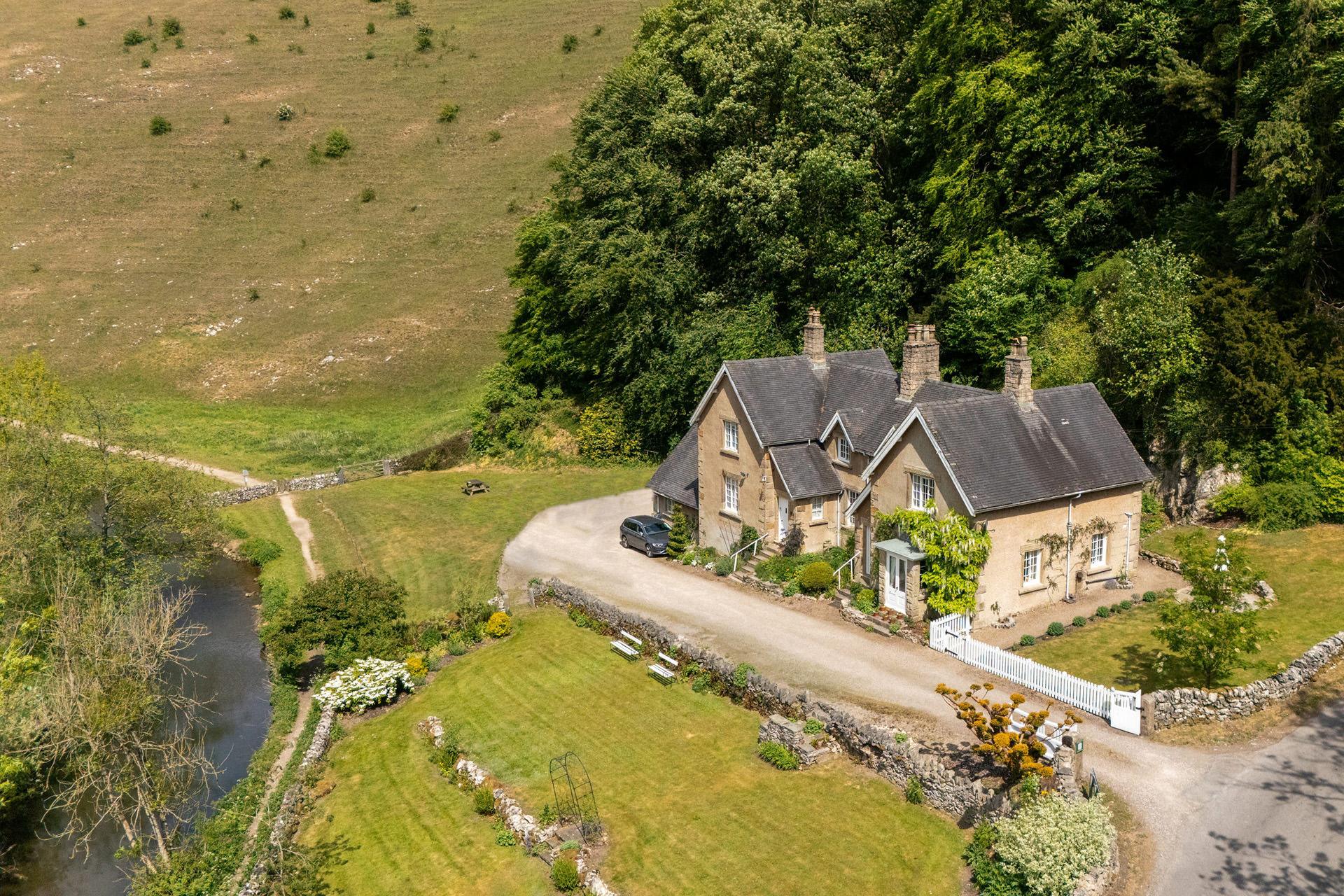
The most valuable aerial shot for any Peak District accommodation is the context composition: a 50-70 degree angle showing the property, immediate grounds, parking areas, and 200-300 meters of surrounding landscape in a single frame. This shot eliminates more pre-booking friction than any other single image because it provides honest spatial information guests cannot obtain elsewhere.
Composition Elements That Drive Direct Bookings
Include roads and pathways in aerial frames. Guests need to visualize arrival and understand access. A shot showing your property with the A57 Snake Pass visible in the background immediately communicates location to anyone familiar with Peak District geography – a powerful shorthand for experienced visitors.
Capture seasonal markers that justify premium pricing. Aerial photography showing autumn color saturation across surrounding woodlands or spring lambs in adjacent fields creates time-sensitive booking urgency that generic property shots cannot generate. This is particularly effective for pubs with rooms and boutique hotels targeting weekend breaks.
Properties using aerial photography in their primary listing galleries see conversion rate improvements of 18-35% compared to ground-only photography, with the highest gains in rural and scenic locations where landscape access is a primary booking driver.
Technical Specifications for Booking Platform Optimization
Booking.com and Airbnb prioritize high-resolution imagery but compress files aggressively. Provide aerial shots at minimum 3000px on the longest edge with proper sharpening for web display. Undersized drone photography loses the detail advantage that justifies its use.
Maintain consistent lighting across your aerial and ground-level gallery. Mixed lighting temperatures between drone and terrestrial photography signals low-quality presentation to sophisticated travelers. If ground shots are captured in overcast conditions, aerial work should match that mood rather than showcasing brilliant sunshine that creates expectation mismatch.
Seasonal Timing for Maximum Visual Impact
Seasonal selection for aerial photography determines whether images feel generic or distinctively Peak District. Summer greenery, while pleasant, creates visual homogeneity that reduces location differentiation. Properties appear similar from above when vegetation obscures topographical features and geological characteristics that define the region.
Late autumn and winter provide superior aerial photography conditions for Peak District hotels because bare trees reveal landscape structure while moorland grasses shift to distinctive brown and purple tones that photograph dramatically. Snow coverage transforms ordinary properties into premium destinations, but this requires flexible scheduling and photographer availability during unpredictable weather windows.
Spring offers a middle position with visible landscape features, emerging greenery, and favorable light angles as days lengthen. The critical period is late April through mid-May before full leaf coverage obscures stone walls, field boundaries, and pathways that provide visual interest in aerial compositions.
Time of Day Impact on Conversion Value
Midday aerial photography in the Peak District creates flat, shadowless images that fail to communicate topography. The elevated perspective that makes drone photography valuable becomes a liability under overhead sun because it eliminates the shadow definition that reveals valleys, ridges, and the dramatic elevation changes that define the region.
Morning golden hour (60-90 minutes after sunrise) produces superior results for properties with eastward or southward views. Evening golden hour works better for westward-facing locations. This timing consideration directly affects shoot scheduling – a photographer who arrives at noon cannot produce effective aerial imagery regardless of technical skill.
| Season | Advantages for Aerial Photography | Booking Impact |
|---|---|---|
| Winter (December-February) | Snow drama, stark landscape definition, bare trees reveal property context, low sun creates long shadows emphasizing topography | Positions properties as premium winter destinations, particularly effective for properties with log fires and cozy interiors shown in supporting shots |
| Spring (April-May) | Fresh green emergence without dense coverage, clear visibility of paths and boundaries, lambs in fields add life, generally stable weather | Appeals to walking and cycling demographics, shows accessibility and surrounding trail networks clearly |
| Summer (June-August) | Maximum daylight hours for flexible scheduling, heather bloom on moorland (late summer), guaranteed green landscapes | Safe choice that matches guest expectations but offers least differentiation from competitor properties |
| Autumn (October-November) | Dramatic color variation, reduced foliage reveals stone walls and field patterns, moody atmospheric conditions, misty valley effects | Strongest conversion for romantic getaways and photography-focused guests, creates urgency for seasonal availability |
Integration with Booking Platforms and Marketing Channels
Aerial photography produces maximum return when strategically positioned in booking platform galleries, not buried at image position seven or eight. Booking.com’s internal data shows the first three images in a property gallery receive 70% of total viewing attention. An aerial context shot belongs in position one or two, immediately following or replacing the standard exterior facade shot.
The strategic sequence for Peak District hospitality properties: aerial context shot showing property and landscape (position 1), ground-level entrance or exterior detail (position 2), hero interior space (position 3). This sequence answers location questions immediately, reducing bounce rate from guests seeking specific geographical positions.
Social media requires different aerial compositions than booking platforms. Instagram and Facebook feeds prioritize square (1:1) or vertical (4:5) ratios, while booking platforms work best with horizontal 3:2 compositions. Commission both orientations during shoots rather than cropping horizontals for social use, which sacrifices compositional integrity and image quality.
Google Business Profile Optimisation
Aerial photography in your Google Business Profile increases click-through rates to your website by 25-40% compared to ground-only imagery. Google’s algorithm favors diverse image types, and aerial shots signal professional management to potential guests comparing multiple properties.
Upload aerial images with detailed geolocation data embedded. Google uses EXIF location information to verify image authenticity and relevance, which influences local search ranking. A properly geotagged aerial shot of your property provides ranking signals that generic stock photography cannot match.
Pro tip: Create a dedicated landing page featuring aerial photography with embedded Google Maps showing your property location and surrounding attractions. This page becomes a high-converting entry point for paid search campaigns targeting location-specific keywords like “hotels near Stanage Edge” or “pubs with moorland views.”
Email Marketing and Direct Booking Campaigns
Aerial photography in email campaigns to previous guests generates 30-50% higher reopening rates compared to standard interior shots. The elevated perspective triggers memory recall of the location experience rather than just the accommodation, which is more emotionally engaging for repeat booking campaigns.
Seasonal aerial shots work particularly well for winter and spring campaigns. A guest who stayed in summer receives an email showing your property surrounded by snow-covered moorland or autumn colors – this creates new urgency by presenting familiar accommodation in an unfamiliar seasonal context they have not experienced.
Frequently Asked Questions
How much does professional drone photography cost for a Peak District hotel or pub?
Professional aerial property photography for hospitality businesses typically costs £250-500 for a half-day shoot delivering 15-20 edited images. This includes proper CAA-compliant operation, insurance, multiple angles and compositions, and post-production editing. The investment typically returns within 8-12 weeks through improved conversion rates on booking platforms, making it one of the most cost-effective marketing expenditures for location-dependent properties.
What time of year produces the best aerial shots for marketing purposes?
Late October through November and February through March produce the most distinctive aerial imagery for Peak District properties. Autumn offers dramatic color variation and visible landscape structure, while late winter provides clear atmospheric conditions and low sun angles that emphasize topography. Summer creates pleasant but undifferentiated green landscapes that reduce location uniqueness. Properties targeting luxury positioning should prioritize winter shoots that include snow coverage, which dramatically elevates perceived value and creates urgency for seasonal bookings.
Do I need permission from neighbours to photograph my property from above?
You do not need neighboring property permission to photograph your own building from above, but drone operation must comply with CAA regulations regarding distance from uninvolved people and congested areas. If your property sits in a village center or near other buildings, the photographer needs to maintain required separation distances or obtain specific operational authorization. Privacy concerns about neighboring properties appearing in shots are generally unfounded – aerial photography from 40-60 meters altitude does not reveal private details that would constitute intrusion. Focus on regulatory compliance rather than neighbor approval.
How often should hospitality businesses update their aerial photography?
Update aerial photography every 18-24 months or when significant property changes occur (new buildings, landscaping, parking areas). Seasonal variety matters more than frequent updates – commission shoots in two different seasons (autumn and spring, or winter and summer) to provide gallery variation rather than repeatedly shooting the same summer conditions. Properties undergoing renovations should schedule new aerial photography immediately upon completion, as context shots showing improvements generate substantial booking increases during the critical post-renovation marketing period.
Can aerial photography help properties rank better in Google search results?
Aerial photography indirectly improves search rankings through increased engagement metrics and reduced bounce rates. When visitors spend more time viewing your gallery and exploring your website because aerial shots answer their location questions, Google interprets this as content relevance and quality. Properties with aerial imagery in Google Business Profiles see higher click-through rates from local search results, which signals value to Google’s ranking algorithm. The effect is measurable but gradual – expect 3-6 months before significant ranking improvements manifest, with strongest gains for location-specific search terms like “hotels with moorland views” or “Peak District pubs near hiking trails.”
How should aerial photos be displayed on booking platforms for maximum impact?
Position your primary aerial context shot as image one or two in booking platform galleries – never bury it beyond position five. The first aerial image should show your property in relation to surrounding landscape and recognizable landmarks, answering location questions immediately. Follow this with ground-level exterior detail, then hero interior spaces. Avoid using multiple similar aerial shots consecutively, which creates repetitive viewing experiences. Instead, alternate between aerial context, ground exteriors, interior spaces, and amenity details to maintain gallery momentum. Properties that front-load aerial photography see 25-40% higher engagement rates and longer gallery viewing times compared to those hiding aerial shots mid-gallery.
What has been your experience using aerial photography for hospitality marketing, and what results have you seen in booking conversion rates?