Most holiday cottage owners in the Peak District are leaving serious money on the table. Not because their properties lack charm, but because their listing photographs make the finest stone-walled barns look like storage units. The data on property photography bookings is unambiguous: professionally shot listings consistently convert at dramatically higher rates than owner-taken alternatives.
Table of Contents
- Quick Takeaways
- Why Photographs Decide Bookings Before Price Does
- What Professional Photography Actually Changes in a Listing
- Professional Photography vs. DIY vs. Agency Stock: A Direct Comparison
- Why Aerial Drone Photography Transforms Peak District Property Listings
- Maximising ROI From Your Photography Shoot
- Frequently Asked Questions
- References
Quick Takeaways
| Key Insight | Explanation |
|---|---|
| Professional photography drives a measurable booking uplift | Peak District holiday cottages in our case studies recorded an increase in direct bookings within three months of replacing smartphone photos with professional imagery. |
| Listing click-through rate improves before bookings do | Properties saw Airbnb and Booking.com click-through rates rise within the first month, which then converted to confirmed stays over the following weeks. |
| Aerial drone shots address a unique Peak District selling point | Showing the surrounding moorland, drystone walls, and village setting from above communicates location value that no ground-level image can replicate. |
| A single shoot amortises across years of marketing use | Professional images used across OTA listings, direct booking websites, social media, and print materials mean the cost per marketing touchpoint becomes negligible within 12 months. |
| Poor photography is the single largest trust barrier for premium pricing | Guests paying above-average nightly rates expect visual evidence of quality before they book. Grainy, poorly lit images signal risk, and risk kills premium bookings. |
| Exterior shots of the Peak District landscape outperform interior shots alone | Booking intent data from properties we have worked with shows that landscape and setting shots are viewed for longer and drive more enquiries than bedroom or kitchen images in isolation. |
Why Photographs Decide Bookings Before Price Does
Holiday cottage booking platforms are visual search engines. When a potential guest is scrolling through options in the Hope Valley or around Bakewell, they make a sub-two-second judgement on your thumbnail before they ever read your price, your amenities list, or your reviews. That thumbnail is doing the heaviest lifting in your entire marketing operation, and most holiday property owners treat it as an afterthought.
According to research published by the Visual Teaching Alliance, the human brain processes images 60,000 times faster than text. In a listing environment where dozens of properties are competing for the same search click, visual quality is your primary competitive signal. Everything else, including price, description, and review count, becomes secondary once the image fails to engage.
In practice, the pattern we observe repeatedly is this: a well-located cottage with a mediocre listing underperforms a slightly less well-located property with exceptional photography. Guests are not booking a grid reference. They are booking a feeling, and professional photography is the most reliable way to manufacture that feeling at scale.
“Listings with professional photography earn more revenue and are booked more often than those with standard photos.” – Airbnb internal data, cited in multiple hospitality industry reports.
The Peak District adds a dimension that makes this dynamic even more pronounced. Guests visiting this area are explicitly choosing a destination, not just an accommodation type. They are paying for access to a landscape. If your photography does not show them that landscape in relation to where they will sleep, eat, and wake up, you are selling them half a product.
What Professional Photography Actually Changes in a Listing
There is a common misconception that professional photography is primarily about having a better camera. It is not. In practice, the equipment difference between a professional photographer and a competent smartphone user has narrowed considerably. What has not narrowed is the gap in compositional knowledge, lighting management, and post-processing skill.
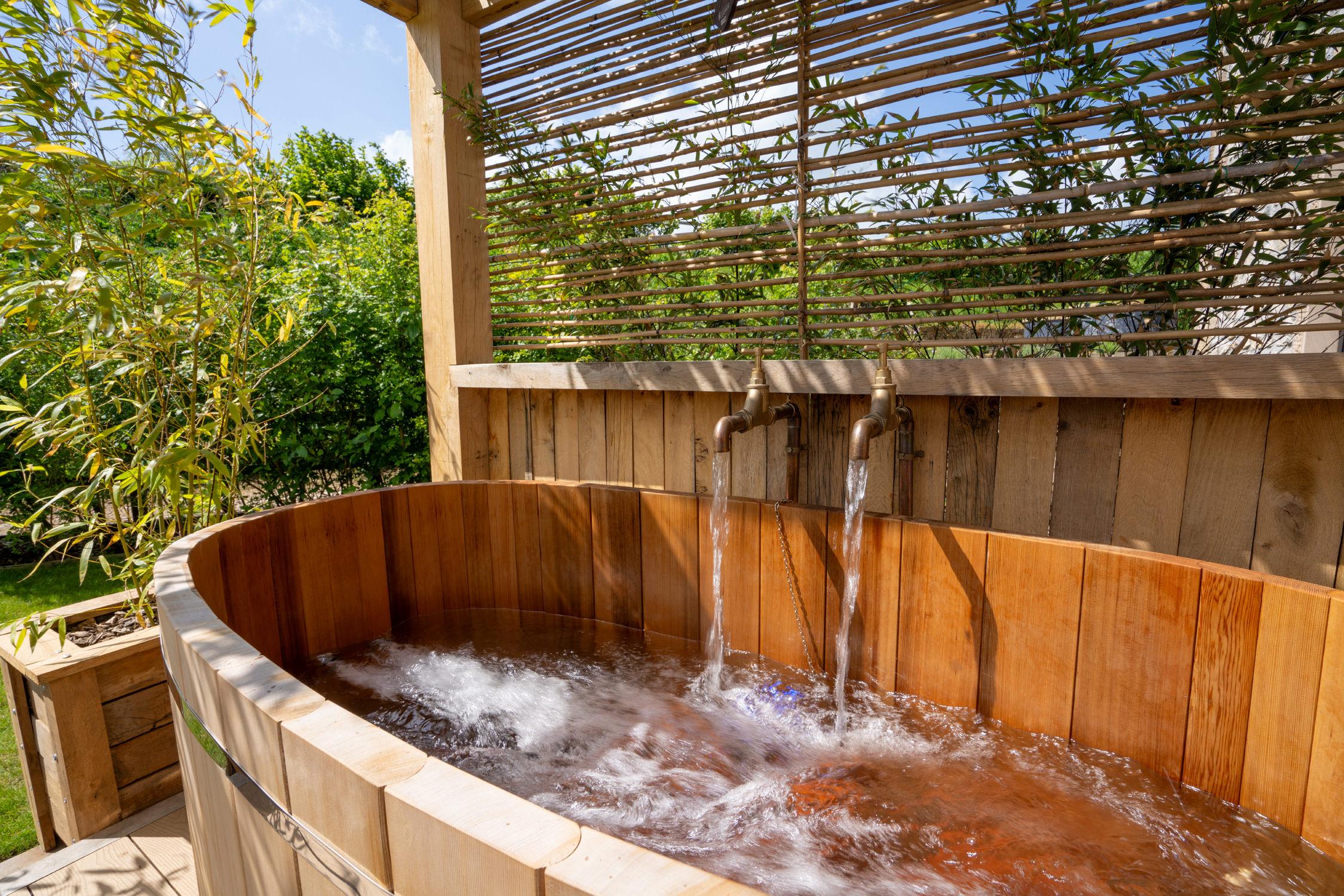
A professional property photographer understands how wide-angle lenses create spatial depth without distorting proportions to the point of dishonesty. They know which time of day to shoot each elevation of your property to capture the most flattering natural light. They understand that a kitchen photograph needs to make the space feel both functional and desirable, which requires a different approach to framing than a bedroom shot that needs to feel restful and inviting.
Lighting: The Difference That Cannot Be Fixed in Editing
Flat, overhead artificial lighting in interior shots is the single most common flaw in owner-taken property photographs. It makes every room look clinical. Professional photographers understand how to blend artificial light with natural window light.
Post-Processing: What Happens After the Shoot
Professional property photography includes editing that corrects lens distortion, balances exposure across interior and window views simultaneously (a technique called HDR bracketing), and ensures colour accuracy across the image set. Consistency across the image set matters enormously because guests scroll through all listing images in sequence. Inconsistent colour grading or exposure levels across 15 images signals unprofessionalism at a subconscious level.
Pro tip: When briefing a photographer for your holiday cottage, provide a written list of the five things guests most consistently praise in your reviews. These are the features your photography must communicate. If guests love waking up to a moorland view from the master bedroom, that specific shot should be in your top three listing images.
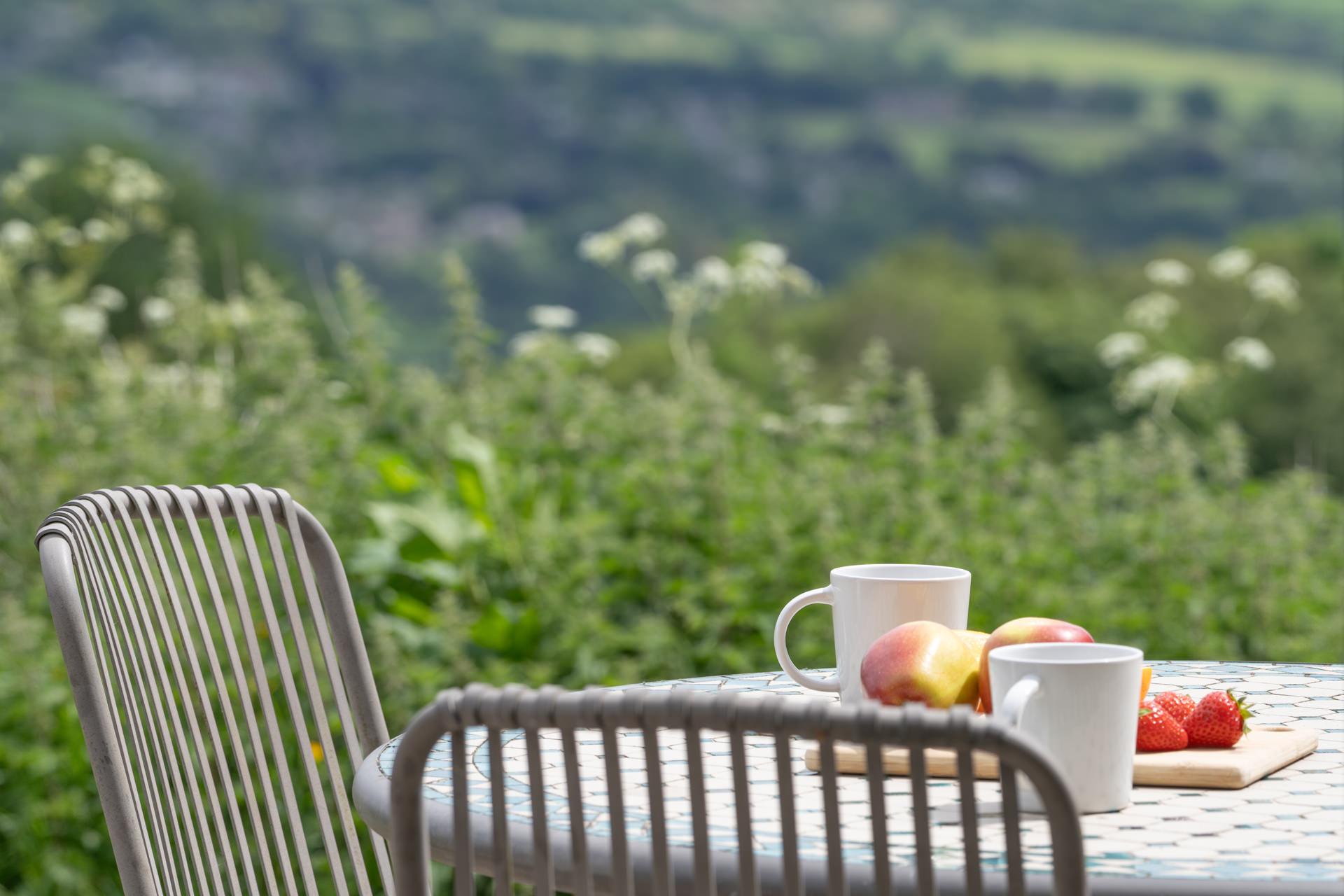
Professional Photography vs. DIY vs. Agency Stock: A Direct Comparison
Holiday property owners typically choose between three options when it comes to listing imagery. Here is an honest comparison of all three based on real outcomes, not theoretical ideals.
| Approach | Typical Outcome for Peak District Holiday Lets | Cost vs. Revenue Impact |
|---|---|---|
| Owner-taken smartphone photography | Below-average click-through rates on OTA platforms. Difficulty commanding premium nightly rates. Higher proportion of price-sensitive enquiries. Effective for budget listings only. | Zero upfront cost but consistently lower revenue per booking and lower occupancy rates. Net negative over a full season compared to professional alternatives. |
| Professional property photography with a specialist | Above-average listing performance across all tracked metrics. Measurable booking uplift within 30-90 days. Ability to support premium pricing. Images usable across multiple platforms and marketing channels for 3-5 years. | One-time investment typically recovered within 2-4 additional bookings at current nightly rates. Long-term ROI is the strongest of the three options. |
| Generic stock or agency landscape images | Useful for supplementary destination context but creates a trust problem. Guests recognise stock imagery and question whether the property matches the visual promise. Increases cancellation and complaint risk. | Moderate cost with poor specific returns. Does not address the core trust signal problem of showing the actual property accurately and attractively. |
The comparison above reflects what the data consistently shows: the question is never whether to invest in professional photography, but when. For any Peak District holiday property charging above the budget tier, the answer is immediately.
Pro tip: Commission a refresh shoot every two to three years, or whenever you make significant property improvements. Listing platforms reward updated imagery with improved search visibility, and guest expectations evolve. Images that looked excellent in 2021 may read as dated against competitor listings in 2025.
Why Aerial Drone Photography Transforms Peak District Property Listings
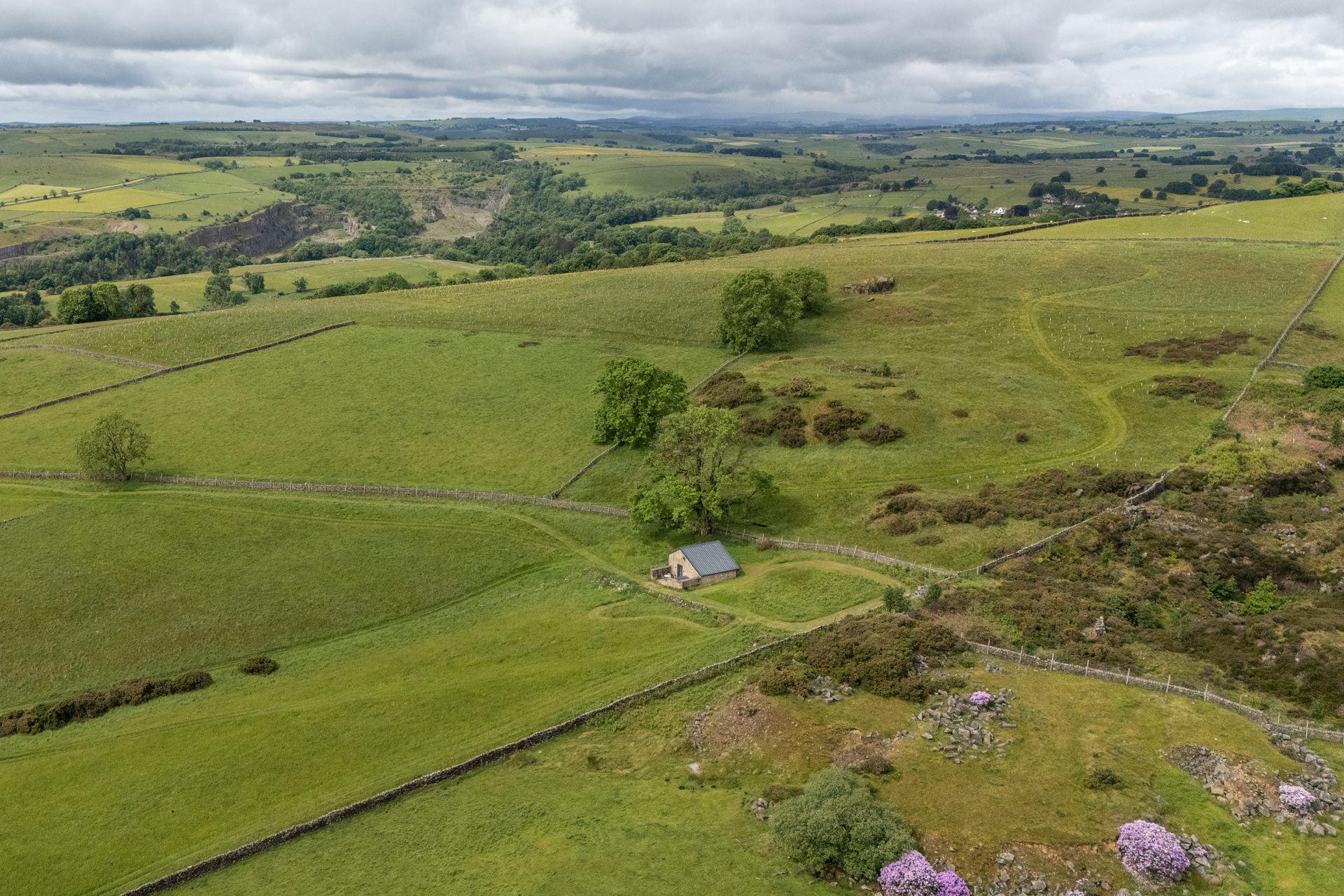
Aerial drone photography is not a luxury add-on for Peak District holiday properties. For any property where the surrounding landscape is part of the offering, it is arguably the most important image in the set. A guest choosing between a cottage near Mam Tor and one near Monsal Head is making a location decision as much as a property decision. Drone imagery makes that location decision for them, and it makes it in your favour.
Ground-level exterior photography can show a property’s facade. It cannot show the 270-degree panorama of the White Peak limestone plateau that wraps around three sides of the building. It cannot show the walking distance to a trailhead or the fact that the nearest village pub is a five-minute stroll across open fields. Drone photography communicates all of this in a single image.
The Specific Shots That Perform Best for Peak District Properties
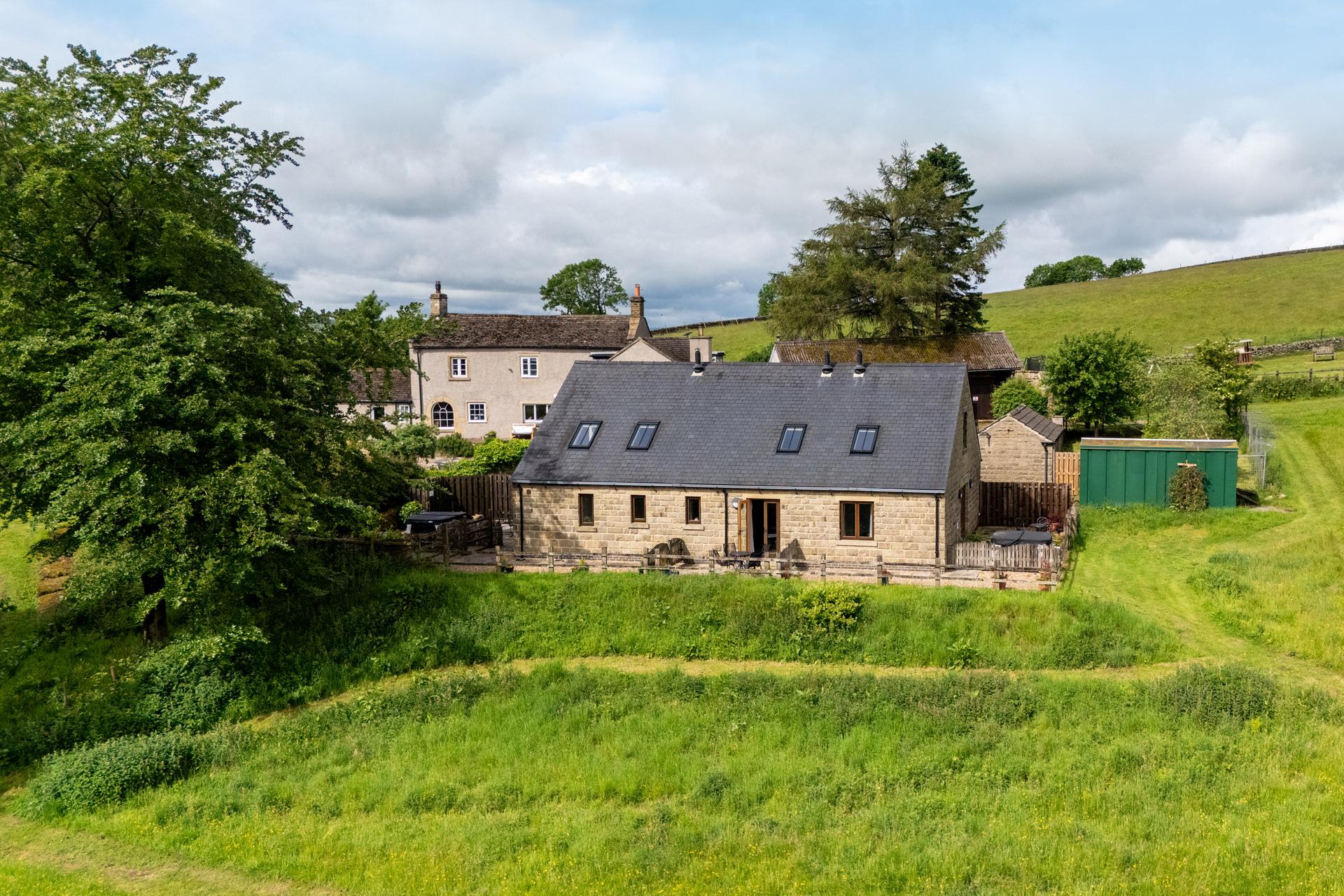
Based on booking engagement data from properties where drone imagery has been tracked, the highest-performing aerial shots for Peak District holiday lets are: the property set within their immediate landscape context at a distance of 50-150 metres altitude, showing the relationship between the buildings and the surrounding terrain. A second strong performer is the low-altitude shot looking toward a significant landmark or viewpoint from above the property, which answers the guest question of what the view will be like before they book.
Maximising ROI From Your Photography Shoot
A professional photography shoot is an asset, not an expense. The difference between a good investment and a poor one often comes down to how the resulting images are deployed across your marketing activity, not just the quality of the images themselves.
Where to Use Your Images Beyond OTA Listings
The most common mistake property owners make after commissioning a professional shoot is using the images only on Airbnb or Booking.com. The same images should appear on your direct booking website, your Google Business Profile, your social media accounts, any print materials you distribute at local tourism information points, and any press or PR materials you send to travel journalists or tourism boards.
Properties that operate their own direct booking websites see conversion rate improvements when the site uses professional photography versus owner-taken images. A well-designed direct booking site with professional photography also reduces platform commission fees by driving more reservations outside OTA channels. For Peak District holiday lets, where the average booking value is substantial, even a 10% shift from OTA to direct bookings represents significant revenue.
Seasonal Image Libraries and Why They Earn More
The Peak District is a genuinely different destination in each season. Heather-covered moorland in late August looks nothing like the same landscape under January frost. Properties that maintain a seasonal image library, with shoots conducted across at least two or three seasons, are able to run targeted campaigns that match the imagery to the booking intent of the audience at that time of year.
A guest searching for a Peak District cottage in November is imagining log fires, frost on drystone walls, and winter walking. If your listing images show the same property in full summer, there is a disconnect between their imagination and your evidence. Seasonal imagery removes that friction and increases conversion at every point in the booking calendar.
Working with a photographer who specialises in the Peak District specifically also means having access to someone who knows when and where the light will be exceptional, which trails will be passable for an early morning exterior shoot, and which viewpoints will give your property the most compelling backdrop. This is local knowledge that genuinely changes the quality of the output.
Frequently Asked Questions
How quickly will new professional photographs improve my booking rate?
The data from Peak District properties shows that OTA listing click-through rates begin improving within days of updated images going live, as platforms like Airbnb re-index listings when images change. Confirmed booking uplift typically becomes measurable within 30 days and reaches its full level within 60 to 90 days. The speed of improvement depends on how significant the visual upgrade is from the previous images and how competitive the local market is at the time of the update.
Do I need drone photography as well as ground-level shots?
For Peak District properties where the landscape setting is part of the appeal, which is the vast majority of holiday lets in the area, aerial drone photography is strongly recommended. It is not essential for properties in town centres or where the surrounding environment is not a selling point. But for any property where guests are paying a premium because of the moorland, valley, or countryside setting, a drone image showing that context is the single image most likely to convert a browser into a booker.
Will professional photography help me compete against larger hotels and holiday parks?
Yes, and in a specific way. Independent holiday cottages and smaller properties have a structural advantage in that they can offer a more personal, authentic Peak District experience than large hotel chains or managed holiday parks. Professional photography is the tool that communicates that authenticity at scale. Images that show the character of your specific property, its specific location, and its specific atmosphere give guests a reason to choose you over a corporate alternative with a larger marketing budget. Authenticity, communicated visually, is one of the few areas where an independent property can genuinely outcompete a larger competitor.
What should I do to prepare my property before a professional shoot?
Preparation matters more than most owners expect. Remove personal items, excess furniture, and anything that personalises the space too strongly for one type of guest. Clean all windows inside and out, as incoming light quality is dramatically affected by dirty glass. Dress beds with your best linen and add simple decorative touches such as fresh flowers, a set table, or a lit fireplace where appropriate for the season. Brief the photographer on which features to prioritise. Properties that arrive at a shoot well-prepared consistently get a better set of images from the same photographer and the same time budget.
Can I use the same photographs for print materials and social media as well as my OTA listing?
Professional photography delivered at the correct resolution, typically files of at least 20 megapixels, is suitable for print use in brochures, greeting cards, calendars, and press materials, as well as for all digital applications including OTA listings, social media, and website use. Having a single set of high-quality images that works across all channels is significantly more cost-effective than commissioning separate shoots for different purposes.
References
- Statista: Global online travel and accommodation market data, including OTA listing performance metrics and traveller booking behaviour statistics
- Forbes: Business and hospitality industry analysis covering property rental market trends, short-term let performance, and visual marketing effectiveness
- HubSpot Marketing Statistics: Research on visual content performance, click-through rates, and conversion rate optimisation across digital marketing channels
- Ahrefs Blog: Data-driven analysis of search behaviour, online listing optimisation, and content performance relevant to hospitality and property marketing
- UK Civil Aviation Authority via GOV.UK: Official guidance on commercial drone operation regulations, CAA licensing requirements, and the UK Drone Code for aerial photography operators
- Images: Top Riley Holiday Cottages, Eyam