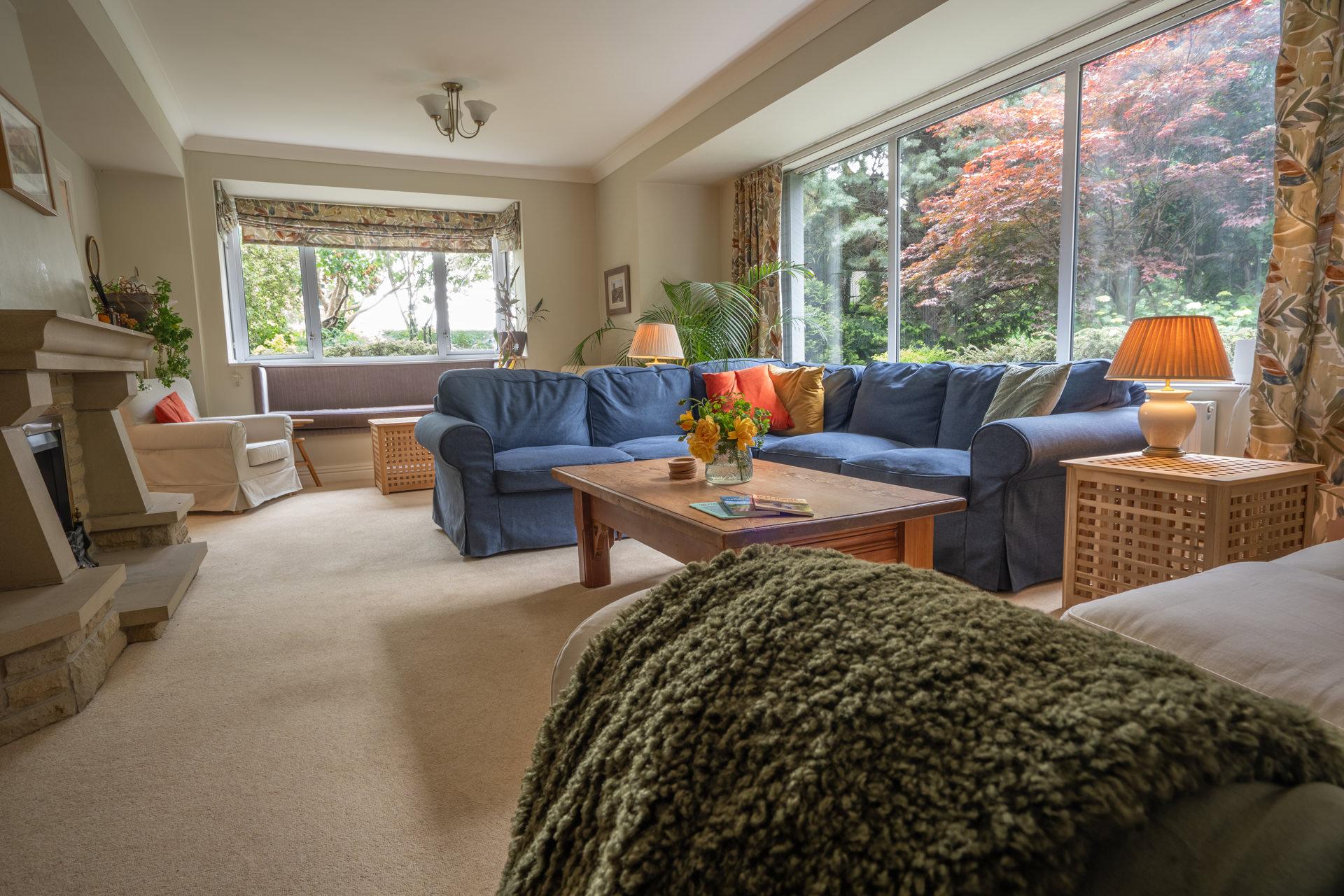
Most commercial spaces in the Peak District are photographed once, poorly, and never updated. The result is that genuinely impressive venues, holiday lets, and hospitality spaces are undersold by images that flatten their character and ignore the landscape context that makes them worth visiting in the first place. Architectural photography done properly for Peak District commercial spaces is not about flattering angles alone. It is about communicating a sense of place, quality, and purpose that converts browsers into bookings. This guide covers exactly how that is achieved.
Table of Contents
- Quick Takeaways
- Why Architectural Photography Matters for Peak District Businesses
- What Separates Commercial Space Photography from Standard Property Shots
- Lighting Conditions in the Peak District
- Workspace Photography for Hotels, Pubs, and Hospitality Venues
- Aerial Drone Photography for Commercial Architectural Context
- Comparing Approaches to Peak District Architectural Photography
- Preparing Your Space for a Commercial Shoot
- How These Images Support Destination Marketing
- Frequently Asked Questions
- References
Quick Takeaways
| Key Insight | Explanation |
|---|---|
| Context sells in the Peak District | Shooting a commercial space without its moorland, stone wall, or valley backdrop removes the primary reason guests choose that venue over a city-centre alternative. |
| Natural light timing is non-negotiable | The Peak District’s soft northern light is most useful in the two hours after sunrise and the hour before sunset. Shooting at midday produces flat, overexposed results on limestone and gritstone facades. |
| Interior and exterior shots must be planned together | A mismatch in colour temperature or atmosphere between interior and exterior images signals an unplanned shoot and reduces buyer confidence in hospitality listings. |
| Drone coverage changes the sales conversation for rural venues | Aerial imagery showing a holiday cottage or hotel within its landscape setting consistently outperforms ground-level exterior shots for rural Peak District properties. |
| Workspace photography needs human scale | Empty commercial spaces look unlived-in. A single well-placed prop or carefully arranged table setting communicates scale and warmth without looking staged. |
| Booking platforms reward image quality directly | According to Airbnb’s own published data, professionally photographed listings earn significantly more per year than self-photographed equivalents, with higher click-through rates from search results. |
| Stone architecture requires specific post-processing | Gritstone and limestone respond differently to white balance correction. Over-warming Peak District stone facades looks artificial and undermines the rugged authenticity guests are seeking. |
Why Architectural Photography Matters for Peak District Businesses
The Peak District is Britain’s most visited national park, drawing approximately 13 million visitors per year according to the Peak District National Park Authority. That footfall does not distribute itself evenly. It concentrates on the venues, attractions, and holiday properties that present themselves most compellingly online. Architectural photography is the primary tool through which a commercial space communicates that it belongs in that shortlist.
The problem is that many Peak District hospitality and property businesses treat photography as an afterthought. Owners take smartphone images, or commission generalist photographers who have no familiarity with how gritstone farmhouses behave in overcast northern light, or how a barn conversion’s interior should be lit to complement rather than fight the view outside its windows.
In practice, the businesses that invest in specialist architectural and commercial space photography see measurable differences in enquiry rates, average nightly booking values, and the quality of their press and destination marketing placements. A well-photographed boutique hotel in Bakewell competes differently than one with flat, under-lit corridor shots on its booking page.
Pro tip: When briefing a photographer, ask specifically whether they have worked with stone-built commercial properties before. The post-processing requirements for gritstone and limestone are distinct from those for brick or glass-and-steel commercial architecture. A photographer without that experience will deliver technically acceptable images that feel wrong for the location.
What Separates Commercial Space Photography from Standard Property Shots
There is a meaningful difference between residential property photography and commercial space photography, even when the subject is a holiday let or a hotel room. Residential photography is primarily about showing square footage and finish quality to buyers. Commercial space photography is about communicating an experience to someone deciding whether to spend money there.
Storytelling versus Inventory
A standard estate agent shoot lists rooms. A commercial architectural shoot builds a narrative. In the Peak District context, that narrative almost always connects interior comfort to exterior landscape. The warmth of a farmhouse kitchen matters more when the viewer can also see frost on the moor through the window. The sweep of a hotel’s function room registers differently when the photographer has positioned the shot to include the valley outside.
This is not a styling exercise. It is a compositional and planning decision that happens before the camera is even set up. The best architectural photographers working in commercial settings scout the space and identify which exterior views belong in which interior frames before they unpack any equipment.
The Role of Vertical Lines
A common mistake in commercial property photography is allowing vertical lines, walls, door frames, and window reveals to converge in the frame. This happens when a wide-angle lens is tilted upward to include a ceiling or a tall feature. The result is a space that looks smaller and less stable than it is. Correcting this in post-production is possible but produces quality loss. Doing it in-camera with a tilt-shift lens or a correctly positioned standard lens is the professional standard for commercial architectural work.
For Peak District stone buildings specifically, converging verticals on thick rubble walls look especially wrong because the irregularity of the stonework is amplified when geometry is already distorted.
Lighting Conditions in the Peak District
The Peak District sits at an elevation and latitude where light quality changes dramatically across seasons and within a single day. This is simultaneously its greatest photographic asset and its most common source of frustration for photographers unfamiliar with the region.
When to Shoot Exteriors
The golden rule for exterior architectural photography here is to avoid direct overhead sunlight on gritstone entirely. The dark, ferruginous surface of gritstone absorbs and scatters midday light in ways that kill all surface texture. The same stone at low angle light reveals every course, every tooled edge, and the patina that makes these buildings look like they have earned their place in the landscape.
East-facing facades photograph best in the first two hours of morning. West-facing facades are best in the late afternoon into sunset. North-facing facades, common in sheltered valley properties, require an overcast sky or supplementary flash because they rarely receive direct light at any time of year.
Interior and Mixed Lighting Challenges
Most Peak District commercial interiors combine three light sources that have very different colour temperatures: daylight from windows (5500K to 6500K depending on sky conditions), tungsten or halogen accent lighting (2700K to 3200K), and potentially LED panels installed for practical use (anywhere from 2700K to 5000K depending on the fitting). Balancing these without bleaching the window view or making the interior look orange is a technical challenge that requires bracketed exposures and compositing, not a single-shot approach.
Pro tip: Ask any photographer you are considering to show you an example of a window-lit interior shot where both the interior detail and the view outside are correctly exposed. This is one of the clearest technical tests of competence in architectural photography. Many generalist photographers simply blow out the window or bracket incorrectly, leaving the exterior as a white rectangle.
Workspace Photography for Hotels, Pubs, and Hospitality Venues
Workspace photography in the context of Peak District hospitality covers a specific set of commercial spaces: dining rooms, bar areas, function rooms, bedroom suites, spa facilities, and the reception and communal areas that define the arrival experience. Each of these serves a different marketing function and requires a different photographic approach.
Dining and Bar Spaces
Dining rooms need to communicate atmosphere, capacity, and food quality simultaneously. In practice, this means shooting the room itself at golden hour or with carefully controlled ambient lighting to create warmth, then shooting the table settings and food separately at a closer focal length for detail work. Using a wide-angle lens for the full room and a 50mm or short telephoto for table details is standard practice. Trying to do both in a single shot with a single lens typically compromises both.
Bar areas in Peak District pubs and inns have a particular character. The combination of real ale handpumps, dark wood, exposed stone, and occasionally original agricultural features is a genuine selling point for visitors choosing between accommodation options. Photographing that character requires low-key lighting and a willingness to embrace shadow rather than flooding the space with flash units that erase the atmosphere.
Bedroom and Suite Photography
For holiday cottages and hotel rooms, the single most important shot is the one that shows the bed in relation to the window, and through the window, the landscape. In a city hotel this is optional. In a Peak District property, it is the core image. Guests booking in Castleton or Hartington are buying the view as much as the room. A bedroom image that does not show what is outside the window is missing the primary sales argument.
Aerial Drone Photography for Commercial Architectural Context
Drone photography for Peak District commercial spaces solves a problem that ground-level architectural photography cannot. It shows the relationship between a building and its landscape at a scale that communicates the isolation, setting, and natural surroundings that are the primary reasons guests choose rural Peak District venues over urban alternatives.
A farmhouse holiday let that is surrounded by open moorland looks entirely different in an aerial shot than it does from the road. The road-level shot shows a building. The aerial shot shows an experience. For destination marketing organisations, tourism boards, and hospitality venues trying to compete for attention in a saturated short-break market, this is a significant difference.
Regulatory Requirements for Commercial Drone Shoots
Drone photography in the Peak District National Park requires Civil Aviation Authority (CAA) authorisation under the UK Drone and Model Aircraft Code, and shoots near villages, structures, or public spaces require compliance with Operational Authorisation requirements. Any photographer offering drone services for commercial architectural work should hold valid GVC (General Visual Line of Sight Certificate) qualification as a minimum, with an operational authorisation from the CAA for commercial work.
This is non-negotiable from a liability standpoint. If a drone incident occurs during a commercial shoot conducted by an unqualified operator, the property owner who commissioned the work may share liability. Always ask for documentation before a drone is launched on your property.
In practice, the National Park designation also means certain altitude restrictions and proximity rules apply that would not apply in an undesignated rural area. A photographer working regularly in the Peak District will have mapped the relevant restrictions and know where alternative compositions are needed.
Comparing Approaches to Peak District Architectural Photography
Not all approaches to architectural photography deliver the same commercial outcomes. The table below compares three distinct approaches commonly encountered by Peak District hospitality and property businesses when commissioning photography.
| Approach | Strengths | Limitations for Peak District Commercial Use |
|---|---|---|
| Generalist Property Photographer | Lower day rate, widely available, familiar with residential staging conventions | No experience with landscape context, gritstone light behaviour, or mixed-light interior compositing. Images often look like estate agent shots rather than hospitality marketing material. |
| Studio-Based Commercial Photographer | Strong lighting control, high technical polish, experience with brand-level commercial work | Often lacks knowledge of Peak District locations, optimal seasonal timing, or how to integrate landscape context into architectural composition. Travel costs and unfamiliarity add time to shoots. |
| Peak District Specialist Architectural Photographer | Deep knowledge of local light conditions, stone building characteristics, drone airspace restrictions, and destination marketing requirements. Exterior and interior images feel coherent and place-specific. | Fewer practitioners to choose from. Day rate may be higher than a generalist, though total project costs are often similar when scouting time and reshoots are factored in. |
The data consistently shows that location-specific knowledge produces better commercial outcomes than technical skill alone when the location is the product being sold. For Peak District hospitality businesses, the location is always part of the product.
Preparing Your Space for a Commercial Shoot
A significant proportion of the quality difference between a good and a mediocre architectural shoot comes down to preparation that happens before the photographer arrives. This is within the property owner’s control, and neglecting it wastes both the shoot budget and the photographer’s time.
Exterior Preparation
Remove cars from view where possible. In Peak District properties, a Land Rover parked in front of a dry stone wall entrance adds nothing and is difficult to remove in post-production without introducing artefacts. The same applies to wheelie bins, garden equipment, and signage that is not part of the permanent brand identity of the venue.
Seasonal timing matters significantly. A shoot timed for late May or early June in the Peak District will capture stone walls against fresh bracken and the last of the hawthorn blossom. The same shoot in late August captures heather moorland. Both are commercially valuable. Neither is available in mid-winter, when the Peak District’s dramatic skies and low light can produce powerful images but dead bracken and bare hedges typically require more careful framing to avoid looking desolate rather than dramatic.
Interior Preparation
Replace any blown bulbs at least a week before the shoot. Test every light fitting in the space and note any that flicker, have colour casts, or are inconsistent with the rest of the room. Replace mismatched bulbs with consistent colour-temperature LEDs before the shoot day.
Remove personal items, branded cleaning products on surfaces, and generic supermarket flowers. These items say nothing about the character of the space and date the images. A single well-arranged vase of local wildflowers, a carefully placed book or tray on a bed, or a lit fire (even in warmer months if the property has one) adds authenticity and scale without looking like a department store display.
“The most expensive mistake a hospitality business can make is to have a genuinely exceptional space and mediocre images of it. The second most expensive mistake is to have exceptional images taken of an unprepared space.” Phil Sproson, Peak District Photography Specialist
How These Images Support Destination Marketing
Tourism boards and destination marketing organisations (DMOs) working in the Peak District operate under a specific set of image requirements that differ from what individual businesses need for their own booking pages. Understanding this distinction matters for any Peak District commercial space that wants its photography to work across multiple distribution channels.
DMOs need images that tell a destination story, not a brand story. They are licensing or commissioning photography to represent the Peak District as a place worth visiting, not to market a specific hotel or holiday cottage. This means architectural images need to be compositionally flexible, with enough context around the building that they can be cropped differently for different editorial uses, and without prominent branding that limits their placement.
Licensing and Usage Rights
A common mistake made by Peak District businesses commissioning architectural photography is not clarifying usage rights upfront. An image shot for a holiday letting website may not automatically be licensed for use by a tourism board, a regional magazine, or a destination campaign. If the goal is to generate imagery that serves multiple marketing channels simultaneously, this needs to be part of the brief and the contract before the shoot begins, not an afterthought when a DMO requests the files six months later.
In practice, commissioning a broader-use license at the point of the original shoot costs a fraction of what a reshooting or relicensing negotiation costs later. For Peak District businesses with ambitions in destination marketing, press, or regional tourism campaigns, this is a planning decision worth making deliberately.
Image Consistency Across a Property Portfolio
For businesses managing multiple holiday properties, hotels with several accommodation types, or commercial spaces that are marketed under a single brand umbrella, image consistency is as important as individual image quality. A portfolio of images where half were shot in summer and half in winter, by different photographers with different processing styles, sends a fragmented visual message that undercuts the brand regardless of how good the individual shots are.
Scheduling a single specialist photographer to cover an entire property portfolio in one or two shoot days is more efficient and more effective than accumulating images from multiple sources over several years. The consistency of light, framing convention, and post-processing style creates a visual identity that compounds over time in marketing materials, social assets, and print products including the kind of high-quality Peak District prints and calendars that make strong supplementary brand touchpoints for hospitality businesses.
Frequently Asked Questions
How long does a commercial architectural photography shoot typically take for a Peak District property?
A thorough commercial shoot for a single Peak District holiday cottage or small hotel takes between four and eight hours for ground-level work alone, depending on the number of rooms, the complexity of the outdoor spaces, and lighting conditions on the day. Adding aerial drone coverage typically adds one to two hours. Multi-property shoots or larger hotel complexes should be planned across multiple shoot days for consistent results.
What is the difference between architectural photography and property photography?
Property photography is primarily transactional, focused on documenting rooms, finishes, and floor plan relationships for buyers or renters. Architectural photography is interpretive. It considers light, composition, and narrative to communicate the character of a space. For Peak District commercial spaces, the distinction matters because guests are not buying square footage. They are buying an experience, and architectural photography is the appropriate tool for selling that experience.
Do I need drone photography for my Peak District holiday let or hotel?
Not always, but for most Peak District rural properties, aerial photography produces the single most compelling image in the set. If your property’s primary selling point is its setting rather than its interior finish, and for most Peak District venues that is the case, then drone coverage is worth the investment. Properties in village centres or with restricted airspace may see less commercial benefit from aerial shots specifically.
How should I use architectural photographs once I have them?
Booking platform listings are the most direct commercial use, but well-executed architectural images should also appear on your own website, in any destination marketing submissions, in press materials sent to travel journalists, and across social media channels. If your photographer has produced print-quality files, commercial print products including greeting cards, framed prints, and calendars featuring your property and its Peak District setting can become an additional revenue stream and a powerful brand touchpoint for guests who visit.
What should I look for when choosing an architectural photographer for a Peak District commercial space?
Look specifically for a portfolio that includes Peak District stone buildings, both interior and exterior work, examples of correctly exposed interior-window-view compositions, and if applicable, drone imagery with CAA authorisation documentation. Ask whether the photographer has experience with destination marketing image requirements and whether their licensing terms cover the distribution channels you need. A photographer who understands the specific commercial context of Peak District hospitality will outperform a technically equivalent photographer who does not know the region.
How does architectural photography affect booking rates for Peak District holiday properties?
The evidence is consistent across platforms. Airbnb’s own data has indicated that professional photography lifts booking rates measurably. HubSpot’s marketing research confirms that visual content drives significantly higher engagement than text or low-quality imagery in hospitality contexts. For Peak District holiday properties specifically, where the visual distinctiveness of the setting is the primary competitive advantage over urban alternatives, this effect is amplified. Properties with specialist architectural photography are not just converting more visitors. They are attracting visitors who are specifically seeking the Peak District experience, which correlates with higher average booking values and repeat visits.
Have you recently had professional architectural photography done for your Peak District property or venue? Share what worked, what you wish you had known in advance, or what questions you still have below.
References
- Statista: statistics on tourism, hospitality booking behaviour, and visual content marketing performance
- HubSpot: marketing statistics on visual content, image quality, and conversion rates in hospitality and property sectors
- Forbes: business and marketing analysis covering real estate photography ROI and commercial property presentation
- Ahrefs Blog: content marketing and search visibility data relevant to hospitality and tourism businesses
- UK Government: Civil Aviation Authority drone regulations and the UK Drone and Model Aircraft Code for commercial operators