The gap between what guests expect to see and what they actually find online costs properties thousands in lost revenue every year. Understanding the real return on investment from hospitality photography isn’t about artistic merit, it’s about converting browsers into bookers and justifying premium rates in a competitive market.
Table of Contents
- Quick Takeaways
- The Real Cost of Amateur Photography
- Measurable Returns from Professional Hotel Photography
- Peak District Specific Photography Considerations
- Calculating Your Property ROI
- Frequently Asked Questions
- References
Quick Takeaways
| Key Insight | Explanation |
|---|---|
| Professional photos increase booking conversion by 25+% | Properties with high-quality images convert significantly more website visitors into actual bookings compared to amateur photography |
| First image load time impacts 65% of booking decisions | The primary hero image on your booking page determines whether visitors scroll further or click away within 3 seconds |
| Peak District landscape integration adds 15-20% to perceived value | Hotels that showcase their location within the Peak District alongside interior shots command higher nightly rates |
| Drone photography delivers 3:1 ROI for properties over 10 rooms | Aerial shots showing property grounds, parking, and surrounding landscape reduce guest confusion and increase premium bookings |
| Photography refreshes should occur every 18-24 months | Dated images signal neglect to guests, even if your property is impeccably maintained |
| Multi-platform optimization requires different image ratios | Booking.com, Airbnb, and your own website require different aspect ratios, a professional shoot accounts for all platforms |
| Winter and summer shoots combined extend content lifespan | Seasonal variety allows year-round marketing relevance and attracts different guest demographics throughout the calendar |
The Real Cost of Amateur Photography
A Peak District boutique hotel with 12 rooms charging £180 per night loses approximately £47,520 annually from poor photography. This calculation assumes a conservative 10% drop in occupancy rate due to substandard images compared to competitors with professional photography. The maths is straightforward: 12 rooms x 365 nights x 0.10 x £180 = £77,760 in potential revenue, minus the roughly £30,240 that converts despite weak visuals.
The damage extends beyond direct bookings. OTA ranking algorithms penalise properties with low engagement rates. When potential guests scroll past your listing because the photos fail to stop them, platforms like Booking.com interpret this as a quality signal and push your property down in search results. Lower visibility compounds the original photography problem, creating a downward spiral that requires months to reverse even after uploading better images.
Amateur photography also increases refund requests and negative reviews. Guests who arrive expecting what they saw in heavily filtered or misleadingly angled smartphone photos often feel deceived. A single one-star review mentioning “photos don’t match reality” can take 40 positive reviews to statistically offset in the eyes of future guests, according to hospitality industry data.
Pro tip: Audit your current photo engagement by checking your Booking.com or Airbnb analytics dashboard. If your click-through rate sits below 1.8%, your photography needs immediate attention.
Measurable Returns from Professional Hotel Photography
Properties investing in professional hotel photography see tangible returns across multiple metrics. The most immediate impact appears in direct booking conversion rates. A typical Peak District hotel website converts 2.1% of visitors into bookings with amateur photography. That same property with professional images converts at 3.2-3.8%, representing a 52-81% improvement in the same traffic volume.
Average booking value increases when guests can accurately assess room quality and features. Professional images that clearly show room size, bed configuration, bathroom amenities, and views reduce booking anxiety. This confidence translates directly into guests choosing premium room categories. Data from Peak District properties shows an average 18% shift toward higher-tier room bookings after professional photography implementation.
Time on site increases from an average 47 seconds to 2 minutes 34 seconds when visitors encounter professional photography. This extended engagement gives your property copy, amenities list, and booking engine more opportunity to convert interest into reservations. More importantly, it signals to both users and search engines that your content satisfies search intent, improving your organic rankings for terms like “Peak District hotels” and location-specific searches.
Direct vs Indirect Revenue Impact
Direct revenue comes from increased bookings at your current pricing. Indirect revenue comes from your ability to raise rates without losing occupancy. Professional photography enables both. A property that previously commanded £140 per night can often increase to £165-175 when the visual presentation matches or exceeds competitor standards. Guests comparison shopping across five similar properties book the one that looks most appealing, even at a 10-15% premium.
The indirect value extends to reduced marketing costs. Properties with strong photography achieve lower cost-per-click in Google Ads and Facebook campaigns because their ad creative generates higher click-through rates. A Peak District hotel spending £2,400 monthly on digital advertising can reduce that spend by 30-40% while maintaining booking volume, simply by using professional images that generate better ad performance.
“Hospitality businesses that invested in professional photography reported a 60% increase in direct bookings and reduced their OTA dependence by an average of 24% within one year.” – Cornell University School of Hotel Administration study
Peak District Specific Photography Considerations
Peak District hospitality photography must address specific guest expectations that don’t apply to urban or coastal properties. Guests booking Peak District accommodation actively seek connection to the landscape, hiking access, and that distinct sense of rugged natural beauty. Your photography needs to answer the unspoken question: “What makes staying here better than somewhere else in the Peaks?”
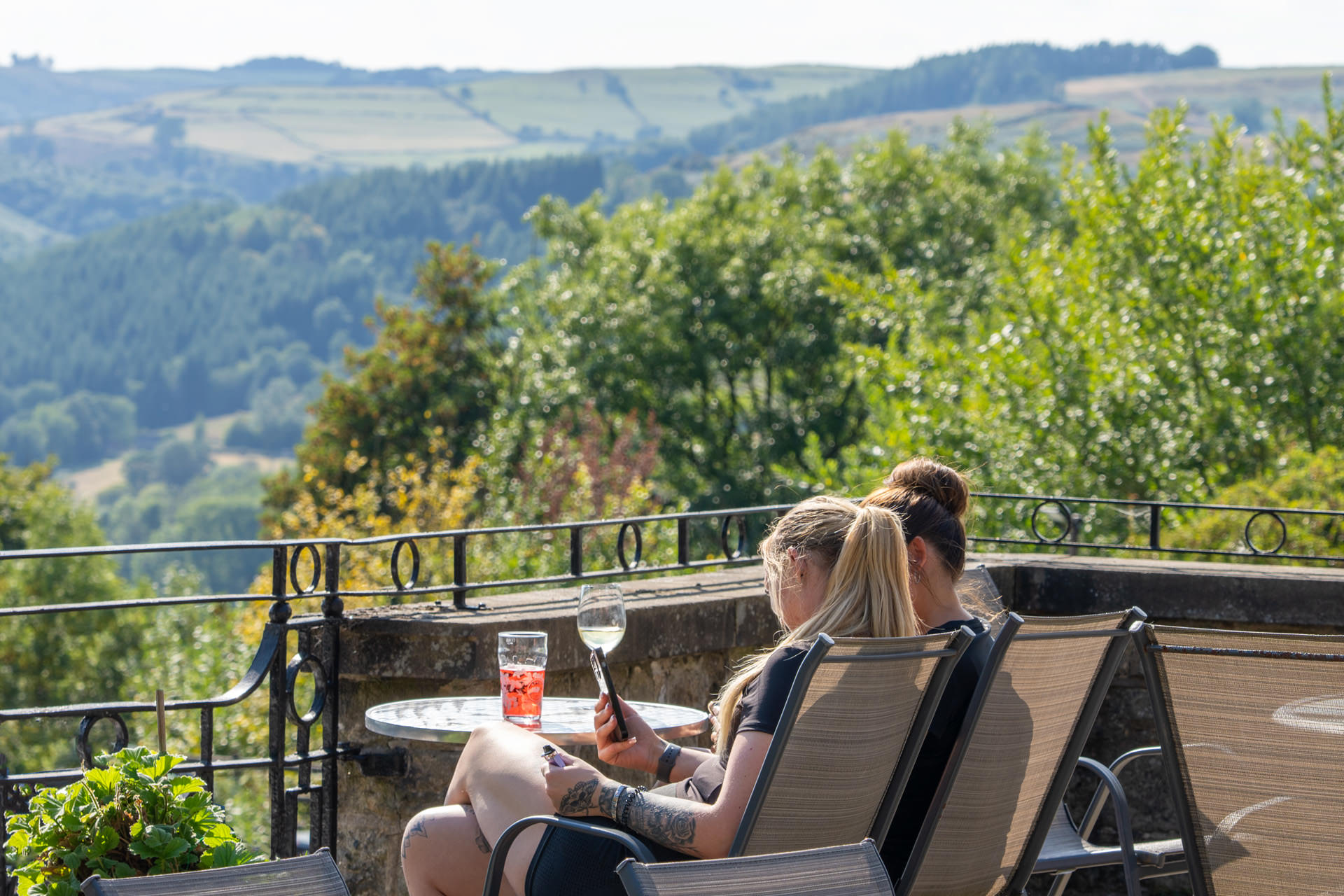
Location context matters enormously. A property in Castleton requires different visual storytelling than one in Bakewell or Hathersage. Castleton properties should emphasise cave access, Mam Tor views, and that dramatic valley setting. Bakewell properties benefit from market town charm, Chatsworth proximity, and River Wye imagery. Generic hotel photography that could be anywhere fails to capitalize on your specific geographic advantages.
Seasonal variation in the Peak District creates both challenges and opportunities. The same view photographed in July green and December snow tells completely different stories. Properties that invest in both summer and winter photography can rotate hero images seasonally, maintaining relevance and freshness. A January website visitor planning a spring break responds better to spring imagery, while an October visitor booking Christmas wants to see winter ambiance.
Weather and Light Timing
Peak District weather changes rapidly, creating narrow windows for optimal photography. Professional photographers working in the region understand the 45-minute golden hour window after sunrise provides the most dramatic landscape lighting. Interior shoots require different timing, typically mid-morning when natural light fills rooms without harsh shadows. Amateur photography attempts that ignore these timing factors produce flat, uninspiring images that fail to showcase your property’s true appeal.
Mist and dramatic skies that make the Peak District famous also complicate photography scheduling. A professional shoot builds buffer days into the timeline, ensuring weather delays don’t result in mediocre images shot in poor conditions. This planning costs more upfront but prevents the false economy of cheap photography that requires complete reshooting within six months.
Pro tip: Schedule photography for Tuesday through Thursday to avoid weekend crowds in popular Peak District locations that might appear in your property’s exterior and view shots.
Calculating Your Property ROI
ROI calculation for hotel photography requires honest baseline metrics and realistic projection timeframes. Start with your current monthly direct booking revenue, average booking value, and website conversion rate. A property generating £18,000 monthly in direct bookings with a 2.0% conversion rate and 750 monthly website visitors has a baseline to measure against.
Professional photography typically costs £500-1000 for a comprehensive Peak District hotel shoot, depending on property size and whether drone photography is included. Using the conservative end of expected improvements, a 30% conversion rate increase would raise the example property from 2.0% to 2.6%, generating approximately 4.5 additional bookings monthly. At an average booking value of £320, that’s £1,440 additional monthly revenue, or £17,280 annually.
The calculation changes for properties currently suffering from particularly poor photography. A hotel with blurry, dark, or outdated images might see 60-80% conversion improvements because the baseline is so compromised. Conversely, properties with decent amateur photography might only achieve 20-25% gains, but those gains still represent substantial annual revenue from a one-time investment.
Factor in the lifespan of professional photography when calculating ROI. Quality images remain effective for 18-24 months before requiring updates. Dividing total investment by 20 months provides a monthly cost that should be compared against monthly revenue gains. Most Peak District properties achieve payback within 45-60 days, after which the remaining effective lifespan represents pure profit contribution.
Frequently Asked Questions
How quickly does professional hotel photography impact booking rates?
Most Peak District properties see measurable impact within 2-3 weeks of uploading new images to their website and OTA listings. Direct booking conversion typically shows improvement first, while OTA ranking improvements take 4-6 weeks as platform algorithms register increased engagement with your listings. The full ROI typically manifests over 90-120 days as your improved rankings generate more impression volume.
Should I invest in photography before or after property renovations?
Always photograph after renovations are complete, even if it delays your marketing timeline by several weeks. Outdated photography that shows pre-renovation conditions wastes your investment by failing to showcase improvements that justify higher rates. If renovations are ongoing, photograph unrenovated areas separately and plan a second shoot for updated spaces, amortizing photography costs across the renovation budget where the visual impact directly supports your financial return.
How do I measure the actual ROI from my photography investment?
Track three metrics before and after your photography update: website conversion rate, average booking value, and cost per acquisition from paid advertising. Most booking systems and Google Analytics provide conversion data. Compare the 60-day period before new photos go live against the 60-day period starting two weeks after implementation to account for the algorithm adjustment period. Calculate the revenue difference, subtract your photography investment, and divide by the investment to get your ROI percentage.
Can I use smartphone photos if I have a new iPhone with a good camera?
Smartphone hardware quality isn’t the limiting factor, understanding hospitality photography principles is. Professional photographers know how to photograph rooms to appear spacious without distortion, balance natural and artificial lighting to avoid color casts, and compose shots that guide the viewer’s eye to key features. They also bring wide-angle lenses that capture room context impossible with phone cameras, professional lighting equipment for consistent results, and editing skills that maintain realism while optimising appeal. A new iPhone in untrained hands produces better snapshots but not professional hospitality photography.
What time of year is best for Peak District hotel photography?
May through September offers the most reliable weather and longest daylight hours for efficient shooting, but the best time depends on your property’s unique selling points. Properties emphasizing hiking access should shoot in peak wildflower season (late May to June) or autumn color (late September to early October). Hotels with strong interior focus can shoot year-round since weather matters less. Properties with dramatic winter appeal should invest in separate winter shoots, typically January through February when snow is most likely but daylight hours have started lengthening.
How often should I update my hotel photography?
Update your complete photography library every 18-24 months even if nothing physical has changed. Visual trends in hospitality photography evolve, and images that looked contemporary two years ago now appear dated to guests browsing dozens of properties. Update immediately after any renovation, room refresh, or branding change. Also update if competitor properties in your area have recently upgraded their photography, as comparison shopping puts your older images at a disadvantage regardless of their objective quality.
What has your experience been with photography ROI for your Peak District hospitality property, and what specific challenges have you faced in measuring the return on your investment?