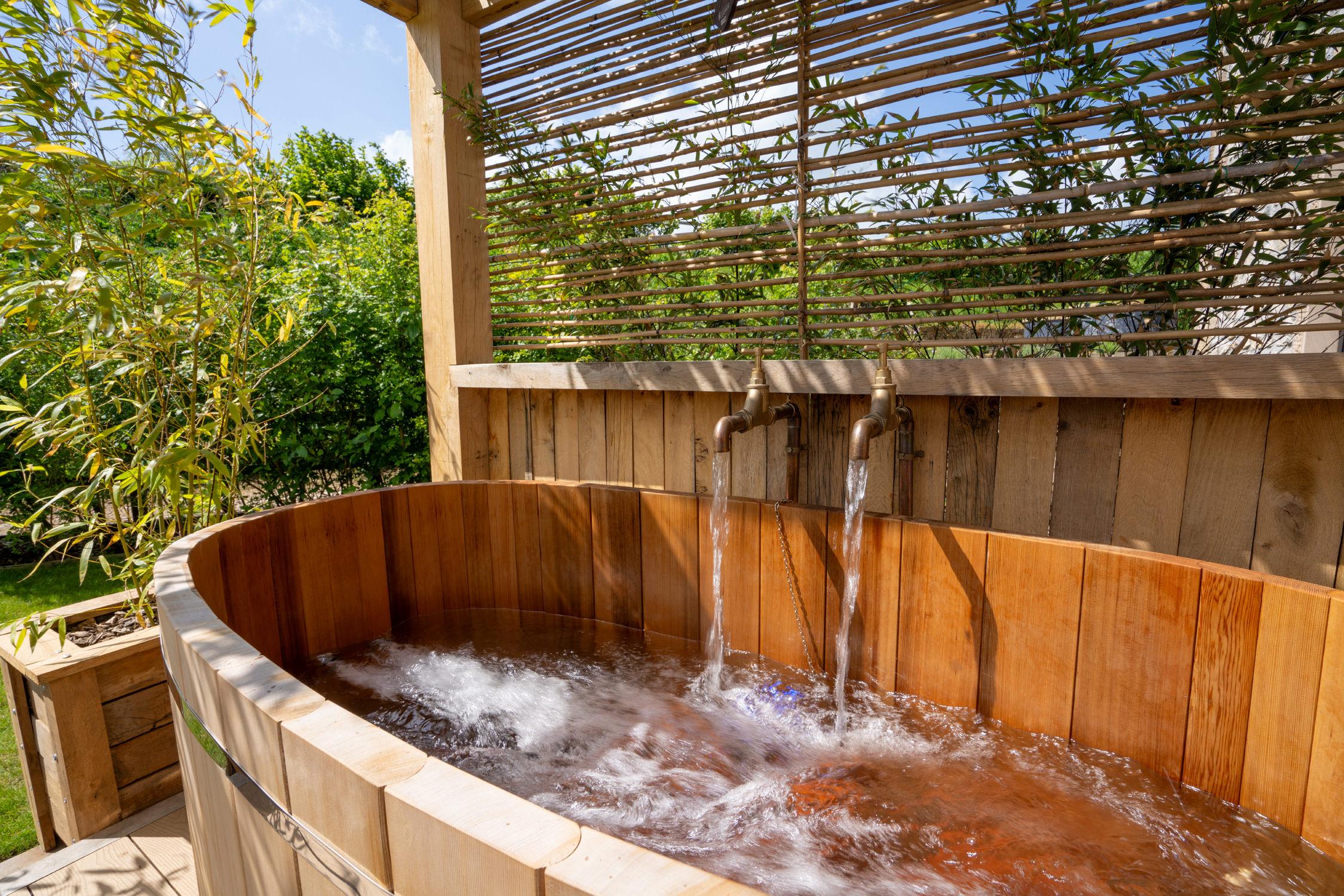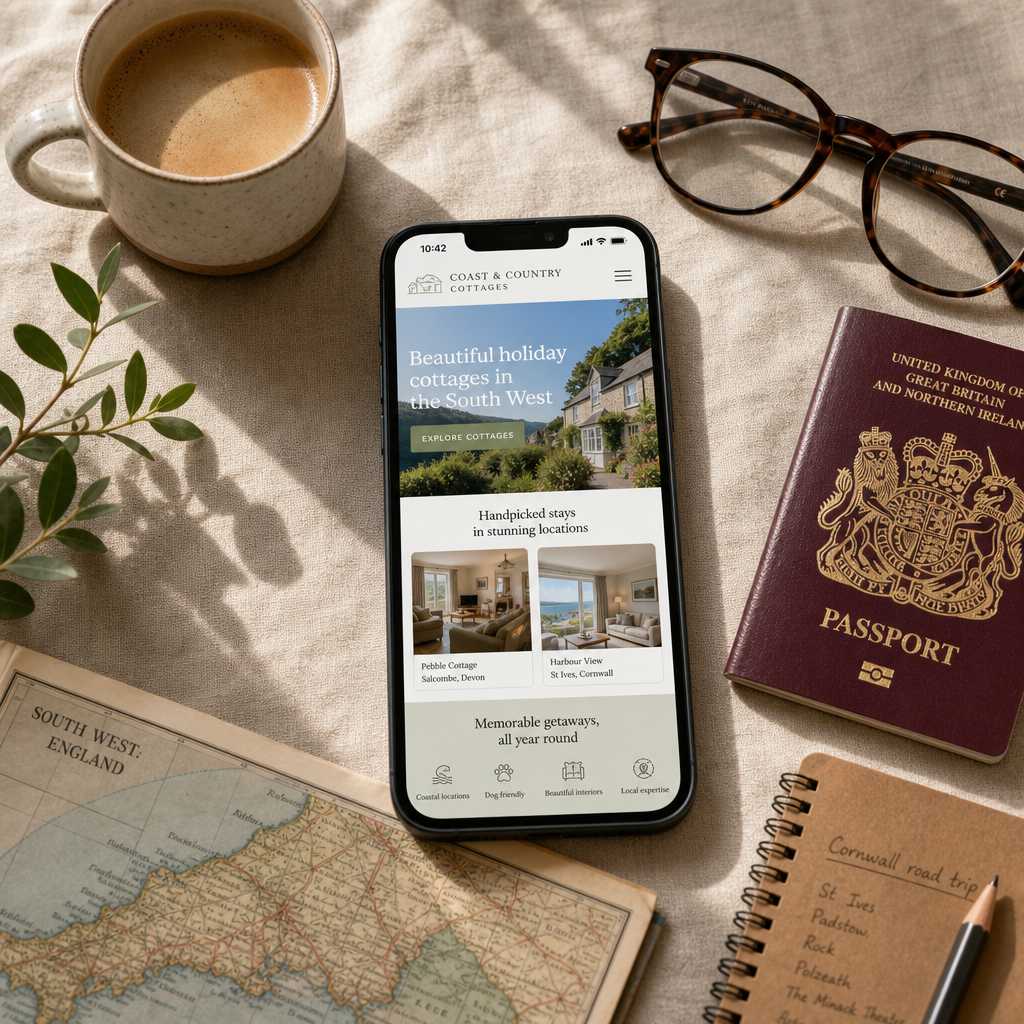
Seventy-three percent of travellers say photos are the single most important factor when deciding where to book. Yet the most stunning Peak District cottage photography in the world will not convert a single booking if it sits on a slow, poorly structured website that breaks on mobile. That is the real problem with how most holiday property owners approach their holiday property website design: they treat photography and the platform as separate decisions. They are not. They are one investment, and underfunding either half wastes the other.
Table of Contents
- Quick Takeaways
- Why Photography Alone Is Not Enough
- Why the Platform Alone Is Not Enough
- What Good Holiday Property Website Design Actually Looks Like
- WordPress vs Template Builders for Holiday Cottages
- How Property Photography and Website Work Together for SEO
- Common Mistakes That Kill Bookings
- Frequently Asked Questions
- References
Quick Takeaways
| Key Insight | Explanation |
|---|---|
| Photography drives the first decision, the platform closes it | Guests decide emotionally from images, then use the website structure to justify and complete the booking. Both steps must work. |
| Slow-loading image galleries kill conversions | A one-second delay in page load reduces conversions by 7% according to Akamai research. High-resolution images need proper optimisation on the platform side to avoid this. |
| WordPress gives holiday cottage owners genuine control | Unlike closed booking platforms, a WordPress website for a holiday cottage lets you own your SEO, your brand, and your direct booking funnel without commission fees. |
| Aerial drone photography changes how a location reads online | Ground-level shots cannot communicate proximity to trails, moorland, or village centres. Drone imagery does, and it is a decisive advantage in competitive Peak District listings. |
| Mismatched quality signals destroy trust | Professional photography on a cheap, broken-looking website tells guests something is wrong. The experience must be consistent from first image to booking confirmation. |
| Image alt text and file naming are shared SEO territory | The photographer names the assets, the website platform publishes them. If neither party thinks about SEO metadata, rankings suffer for both property photography and website pages. |
| Direct bookings require both trust signals and friction removal | Guests will abandon a booking flow if they cannot find clear photos of every room, or if the booking form is buried three clicks deep. Design and imagery must eliminate both problems. |
Why Photography Alone Is Not Enough
Commissioning excellent property photography and then uploading it to a poorly built website is one of the most common and expensive mistakes holiday property owners make. The images may be technically perfect but the platform will undermine them at every turn.
In practice, the most frequent failure points are gallery layouts that compress and crop images unpredictably, page speeds that make large photo files take four or five seconds to load, and mobile displays that stack images awkwardly so the first thing a phone user sees is a half-cut hero shot of a ceiling. None of these are photography problems. They are website problems that destroy the photography investment.
A common mistake is assuming that uploading to Airbnb or Booking.com solves the platform side of the equation. Those channels control your imagery presentation, your brand context, and most importantly, they take a commission on every booking that could otherwise go directly to you. A great set of Peak District property photos deserves a platform you own and control.


The trust gap between first impression and booking
When a potential guest lands on your website after searching for holiday cottages in the Peak District, you have roughly eight seconds before they make a subconscious quality judgement. That judgement is not just about the photos. It is about the visual coherence of the whole page: the font choices, the white space, the loading speed, and whether the photos are presented in a gallery that feels premium or a grid that looks like a 2009 blog.
Trust signals compound. A well-composed exterior shot paired with a clean, fast-loading page tells the guest this property is professionally managed. The same photo on a cluttered, slow website produces the opposite reaction. The platform frames the photography, and a bad frame ruins a good picture.
Pro tip: Always brief your photographer and your web designer at the same time, not sequentially. The photographer needs to know the aspect ratios and hero image dimensions required by the website layout before the shoot, not after.
Why the Platform Alone Is Not Enough
A technically excellent website with mediocre photography is equally ineffective, just in a different way. The platform can do everything right, load in under two seconds, rank on page one for relevant search terms, and deliver a clean mobile experience, but if the images show a grey overcast sky, a slightly unmade bed, and a living room shot from the corner with a mop accidentally in frame, no amount of good web design will close the booking.
HubSpot’s research consistently shows that visual content is processed 60,000 times faster than text. For holiday properties specifically, guests cannot touch, smell, or walk through the space before booking. Photography is not supplementary evidence. It is the primary product sample they have to work with.
“Images are the closest thing to a product sample in the travel industry. Poor photography is not just a missed opportunity, it is an active signal of poor quality.” – Phocuswright Travel Research, cited in multiple hospitality conversion studies
What professional property photography actually delivers
Professional photography for a holiday property in the Peak District is not just about taking technically correct images. It is about capturing the specific character of a location. The way autumn light hits the stone walls of a Derbyshire barn conversion at 7am is not something a smartphone and a bright afternoon can replicate. That character is precisely what differentiates your property from the 40 other cottages competing for the same search term.
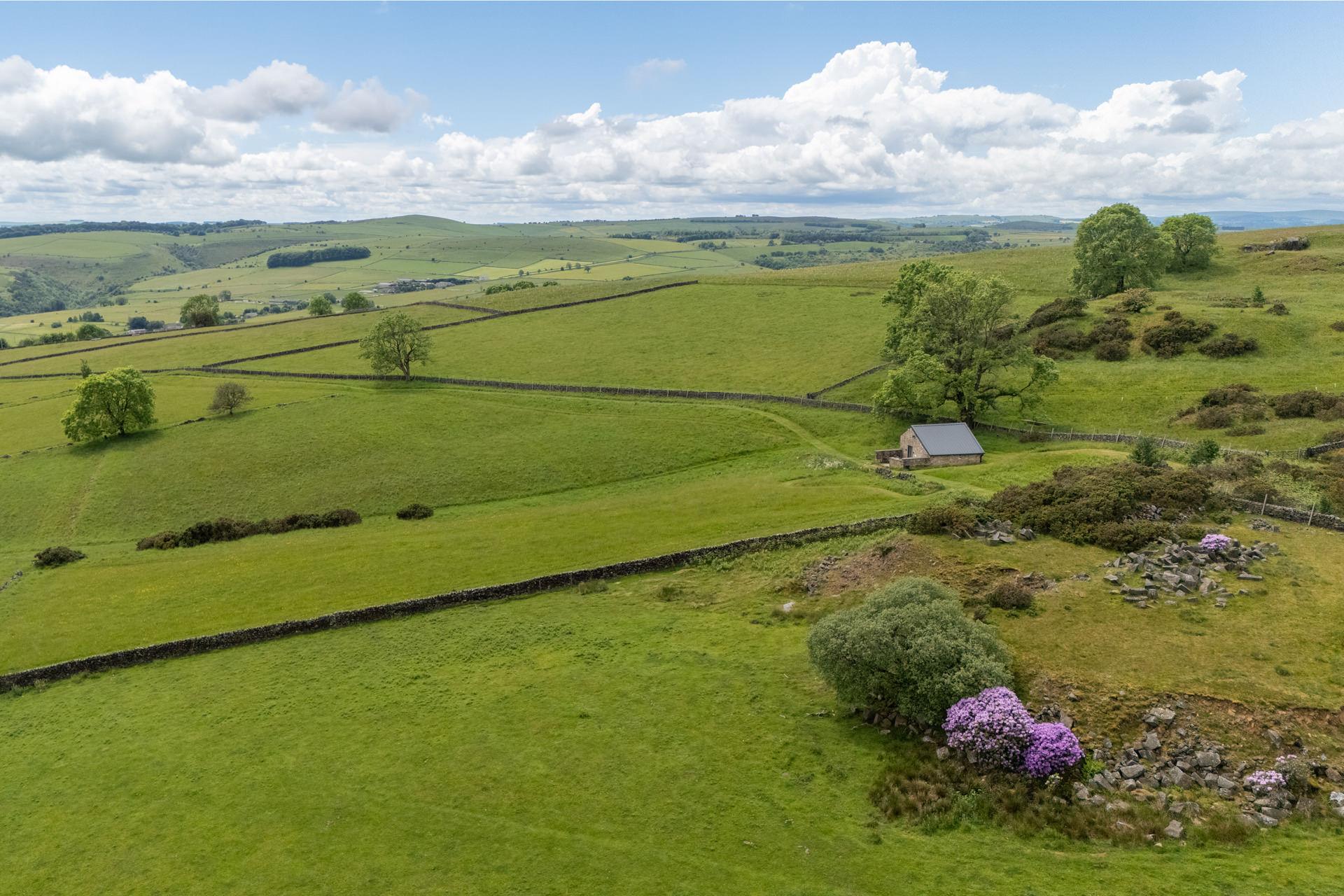
Drone photography adds a further dimension that ground-level images simply cannot provide. Showing the moorland behind the property, the proximity of a reservoir trail, or the village church visible from the garden answers questions that guests have before they know to ask them. These contextual images also perform well as social sharing assets and destination marketing material, extending their value beyond the booking page itself.
What Good Holiday Property Website Design Actually Looks Like
Good holiday property website design does three things well: it presents imagery without technical interference, it structures information so guests find answers before they leave, and it makes the path from interest to booking as short as possible.
In practice, that means a full-width hero image or carousel on the homepage that loads fast and shows the property’s strongest visual. It means a gallery page that displays images at their intended proportions, not cropped thumbnails. It means room-by-room sections that pair photos with concise descriptive copy so guests can mentally walk through the property. And it means a booking widget or call to action that is never more than one scroll away.
The role of page structure in keeping guests engaged
Page structure matters enormously for holiday property websites because guests are conducting a mental audit as they scroll. They are checking: does this look as described, is there enough space for my group, what is the kitchen actually like, can I see the view from the bedroom? If any of these questions goes unanswered because the images are missing or the page layout makes them hard to find, the guest leaves and books elsewhere.
A well-designed WordPress website for a holiday cottage addresses this by creating logical page sections that mirror the mental checklist guests bring to the browsing process. Exterior and location first, living spaces second, bedrooms and bathrooms third, local area last. This is not arbitrary. It reflects the actual order in which guests build confidence in a booking decision.
Pro tip: Include at least one image that shows the property in its Peak District landscape context, not just the interior. Guests booking in this region are partly booking the location. If your website only shows rooms, you are underselling your most competitive asset.

WordPress vs Template Builders for Holiday Cottages
The choice of platform for a holiday property website is not a minor technical detail. It is a business decision that affects how much you pay in commissions, how well you rank in search, and how much control you have over your own brand.
| Platform Type | Strengths for Holiday Properties | Weaknesses for Holiday Properties |
|---|---|---|
| WordPress (self-hosted) | Full control over SEO, design, and booking integrations. Can host a gallery optimised for large professional images. No commission fees on direct bookings. Scalable for multiple properties or a growing brand. | Requires initial investment in professional setup. Needs ongoing maintenance or a support arrangement. Not suitable as a DIY project if you have no web experience. |
| Squarespace or Wix | Quick to set up. Decent templates. Suitable for very simple single-property sites with basic image galleries. | Limited SEO control. Image compression is often handled poorly. Customisation hits hard ceilings quickly. Not well suited to complex booking integrations or multi-property management. |
| OTA Listing Only (Airbnb, Booking.com) | Immediate visibility. Built-in booking infrastructure. No website maintenance required. | No ownership of the guest relationship. Commission fees on every booking. Zero control over how your photography is displayed. Algorithm changes can reduce visibility overnight. |
The data consistently shows that direct booking websites, when properly built and maintained, reduce guest acquisition costs significantly over time. A WordPress website for a holiday cottage is the most effective long-term platform because it treats SEO, branding, and booking conversion as an integrated system rather than an afterthought.
How Property Photography and Website Work Together for SEO
Most holiday property owners think of SEO as a website-only concern. In reality, property photography and website decisions are deeply intertwined from an SEO perspective, and getting this wrong costs rankings.
Image file names, alt text, and structured data around images are all factors that Google uses to understand what a page is about. A professionally shot image of a Peak District cottage exterior saved as IMG_4821.jpg with no alt text tells Google nothing. The same image saved as peak-district-holiday-cottage-exterior-derbyshire.jpg with descriptive alt text actively supports the page’s ranking for relevant local search terms.
Page speed and Core Web Vitals
Google’s Core Web Vitals directly affect rankings, and large unoptimised image files are one of the most common causes of poor Largest Contentful Paint scores. A photography-heavy holiday property website that has not been technically optimised will rank below less visually impressive competitors simply because it loads slowly.
The solution is not to use smaller images. The solution is to use a platform that handles image optimisation correctly through next-generation formats like WebP, lazy loading for below-the-fold images, and properly configured caching. WordPress, with the right configuration, handles all of this. Most template builders do not.
Local SEO for Peak District holiday properties
For properties in the Peak District specifically, local SEO is a significant opportunity that many owners underutilise. Search terms like “holiday cottage near Bakewell” or “dog-friendly cottage Derbyshire” have genuine commercial intent and relatively manageable competition compared to generic national terms. A well-structured website with location-specific page content, combined with photography that visually confirms the location through landscape and aerial shots, creates a strong signal for these local search queries.
Common Mistakes That Kill Bookings
After working across property photography and website design for holiday businesses in the Peak District, the same avoidable mistakes appear repeatedly. They are not complicated problems, but they are consistently expensive ones.
The first is using the same images on the direct booking website as on OTA listings without any optimisation for the web platform. OTA platforms compress images on upload. Uploading those compressed images to your own website compounds the quality loss and makes professional photography look mediocre.
The second is building a beautiful website with no clear booking call to action. In practice, many holiday property websites bury the booking button at the bottom of a page or link to an external booking system with no visual continuity. Guests interpret friction as risk and leave.
The third is treating the website as a one-time build. Seasonal photography updates, fresh content for local events, and regular technical maintenance are what keep a holiday property website performing over time. A website built in 2021 with photos from the same year is not doing the job a 2024 guest expects it to do.
The fourth, and perhaps the most costly, is separating the photography brief from the web design brief entirely. When the photographer and the web designer have never spoken to each other, the images rarely fit the layout they are destined for. Hero images are portrait when the design needs landscape. Gallery images are inconsistent in tone. The result is a website that looks assembled rather than designed.
Pro tip: When commissioning a Peak District property shoot, brief the photographer on your website’s specific image dimensions, your colour palette, and the mood you want the brand to convey. This is not micromanaging. It is making sure the investment in photography and the investment in web design work as a single, coherent asset.
Frequently Asked Questions
How much does holiday property website design typically cost in the UK?
A professionally built WordPress website for a holiday cottage in the UK typically ranges from £1,500 to £5,000 depending on the number of properties, the complexity of booking integrations, and the level of custom design work required. This is a one-time build cost, not a recurring commission, which means it pays back relative to OTA fees within one to two seasons for most properties with reasonable occupancy rates.
Can I use smartphone photos on my holiday property website?
Technically yes, but the competitive disadvantage is significant. Peak District holiday properties are competing against professionally photographed listings. Smartphone photos taken without controlled lighting, proper wide-angle lenses, or post-processing will consistently underperform against professional alternatives. In a market where guests make booking decisions primarily from images, this is not a place to reduce costs.
How often should I update the photography on my holiday property website?
At minimum, property photography should be refreshed when any significant redecoration or refurbishment takes place. Beyond that, adding seasonal imagery, particularly autumn and winter shots for a Peak District property, gives you relevant visual content for different booking windows throughout the year. An all-summer gallery implicitly communicates that the property is only desirable in warm weather, which is rarely true and always limiting.
What is the difference between a WordPress website for a holiday cottage and a listing on Airbnb?
An Airbnb listing is renting space on someone else’s platform. A WordPress website is owning your digital presence. The practical differences are: no commission fees on direct bookings, full control over how your photography is displayed and at what quality, the ability to build SEO equity that compounds over time, and a direct relationship with your guests without a third party in between. Most successful holiday property businesses use both, with OTA listings as a visibility tool and the direct website as the preferred booking destination.
Does drone photography actually increase bookings for holiday properties?
The data from hospitality conversion studies consistently shows that properties with aerial imagery receive higher engagement rates on listing pages. For Peak District properties specifically, drone photography communicates what makes the location exceptional: the moorland, the reservoir views, the village proximity, the trail access. These are decisive factors for the walking and outdoor activity demographic that is the core market for Derbyshire holiday lettings. It is not a luxury addition. For properties with strong location assets, it is one of the highest-return photography investments available.
Should my photographer and web designer be the same person or company?
Not necessarily, but they must communicate directly with each other before any work begins. The ideal scenario for a Peak District holiday property is a photographer who understands web presentation requirements and a web designer who knows how to display high-quality imagery without technical compromise. When these two specialists work in isolation, the results are consistently weaker than when they work from a shared brief. Some specialists in this region offer both services, which eliminates the coordination problem entirely.
Have you recently updated either your property photography or your holiday website, and which made the bigger difference to your booking enquiries? Share your experience below.
References
- HubSpot marketing and visual content statistics used by hospitality and travel marketers
- Statista travel and tourism industry data including online booking behaviour and conversion research
- Moz SEO learning centre covering Core Web Vitals, image optimisation, and local search ranking factors
- Forbes business and digital marketing analysis relevant to direct booking strategies for hospitality businesses
- Ahrefs blog covering technical SEO, page speed impact on rankings, and image SEO best practices